


Your agency is pushing you to move your lead generation campaigns to Performance Max. Or maybe you've heard that Performance Max is the future and you should get on board. But here's the truth: Performance Max for lead generation is fundamentally different from Performance Max for e-commerce, and most of the success stories you've heard don't apply to service businesses.
If you're running campaigns to generate leads - not immediate online purchases - you need to understand the specific challenges, requirements, and realistic expectations for Performance Max before making the switch. Let me walk you through what actually matters for lead generation businesses.
What Is Performance Max and Why Google Wants You to Use It
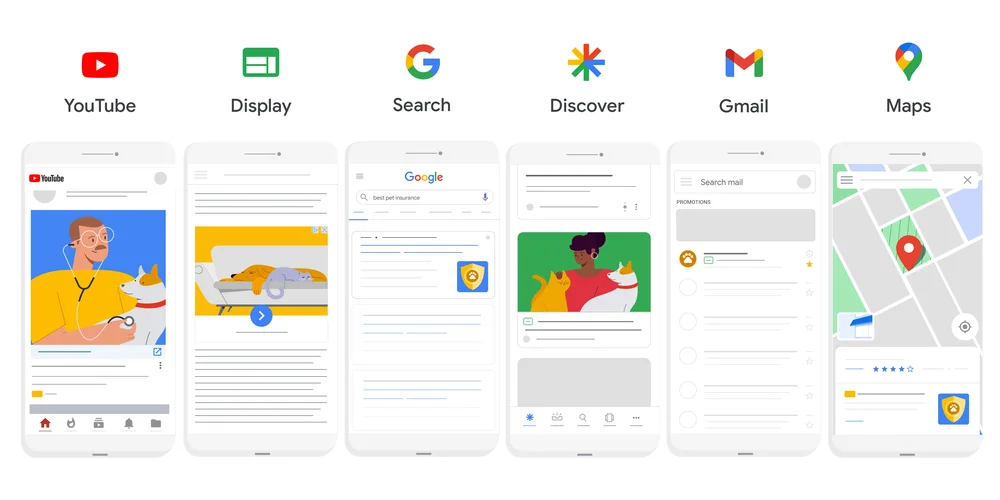
Performance Max is Google's fully automated campaign type that replaced Smart Shopping and is gradually replacing traditional campaign structures. Instead of you controlling bids, placements, and targeting, you provide Google with your goals and creative assets, and the algorithm handles everything else.
Google's vision is a future where advertisers focus on business goals and creative, while machine learning handles the technical optimization. They argue that their algorithms can process millions of signals in real-time and make better decisions than human advertisers manually adjusting campaigns.
The promise is compelling: better results with less work. Set a target cost per lead or target ROAS, provide quality creative, and let Google find your customers across Search, YouTube, Display, Gmail, and Discover. You'll get more leads at better efficiency without spending hours managing campaigns.
The reality comes with significant trade-offs. You lose visibility into where your budget is going. You can't see which search terms triggered your ads. You have limited control over placement. And most critically for lead generation: you're trusting the algorithm to optimize for lead quality, not just lead quantity.
Important Considerations When Switching To Performance Max From Search
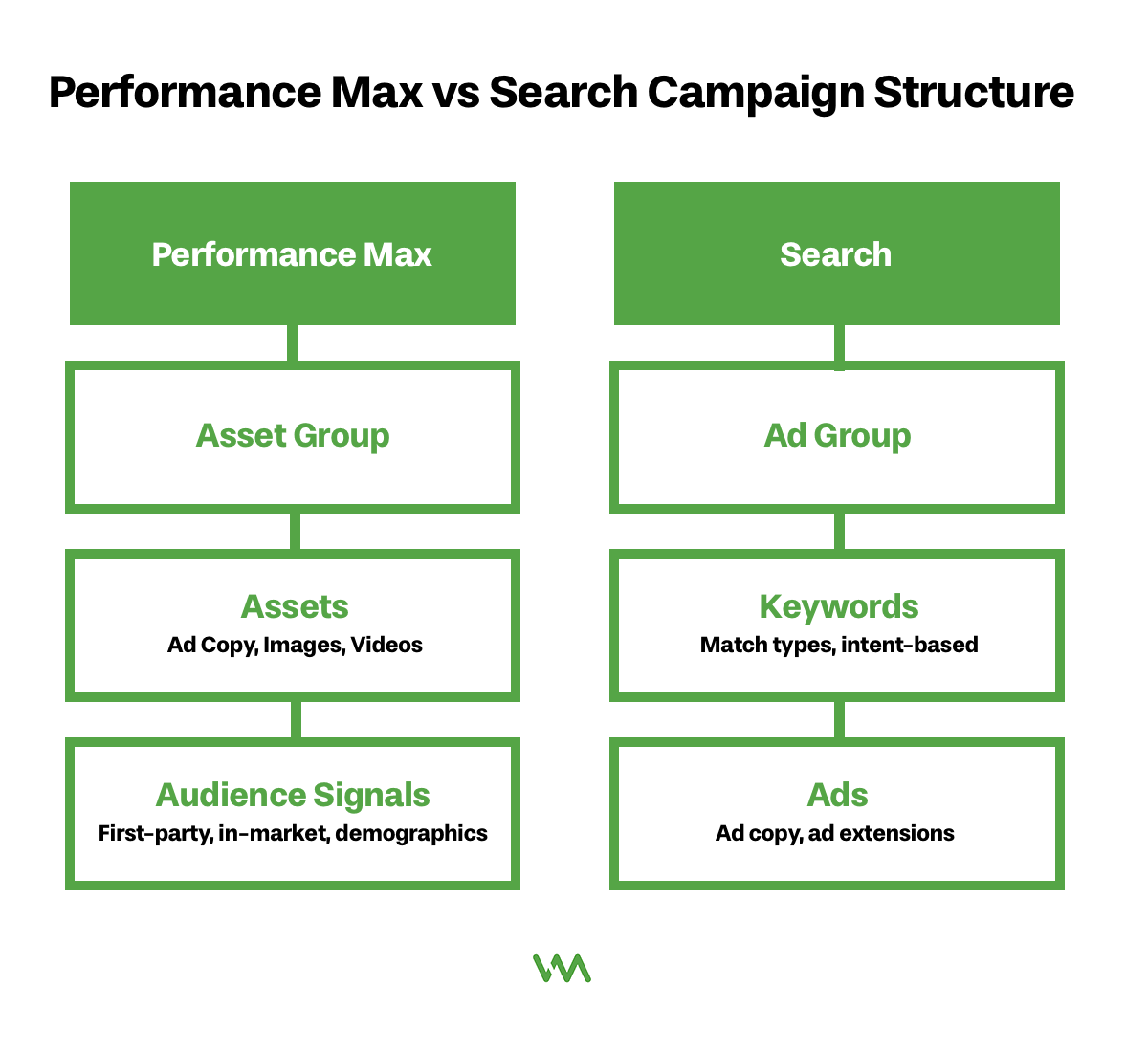
The structure is different from what you might be used to with Search campaigns.
Organize Asset Groups Like Ad Groups
Campaign structure for service businesses typically involves one campaign with multiple asset groups. Each asset group should represent a different service line, audience segment, or geographic market. For example, a law firm might have asset groups for "personal injury," "family law," and "criminal defense" rather than one asset group for everything.
Asset groups organized by service type or audience make the most sense. If you offer multiple services with different ideal customers and different economics, separate asset groups let Google optimize each one independently. A plumber might separate "emergency repairs" from "remodeling projects" because the lead values and customer intent are completely different.
Triple Check Your Conversion Setup & Quality
Conversion actions that matter need to be set up correctly. For lead generation, this typically means form submissions, phone calls, and sometimes chat conversations. Make sure all your conversion actions are tracked, but use the most valuable one (usually phone calls for service businesses) as your primary conversion action that Performance Max optimizes toward.
Prepare To Lose a Bit of Control
Where your ads appear is across all Google properties: Search results (your ads compete alongside text and Shopping ads), YouTube (video ads and in-feed ads), Display Network (banner ads on websites), Gmail (ads in promotions tab), Discover feed (on mobile devices), and Maps. This expanded reach is both the benefit and the risk - more places to find customers, but also more places to waste budget if targeting isn't precise.
How the algorithm decides where to spend your budget is based on where it thinks it can achieve your target CPA or ROAS. If YouTube placements convert at $50 per lead and Search converts at $75 per lead, but you set a $60 CPA target, Performance Max will heavily favor YouTube. This sounds great until you realize the YouTube leads might be lower quality even though they're cheaper.
The Critical Difference: Lead Quality Will Make or Break Your Performance Max Campaigns
This is where most businesses get tripped up.
Align Your Conversion Strategy With Revenue
Lead quality varies dramatically in ways that e-commerce revenue doesn't. With eCommerce, a $50 product purchase is worth $50 whether it came from Search or Display. But a lead from Search might close at 20% while a lead from YouTube might close at 5%. Google has no way of knowing this unless you're feeding offline conversion data back into the platform.
This is precisely why you should associate lead values with your conversions. Or even better - set your primary conversion to be an offline sale, and link everything together using your CRM and tools like Zapier.
Another example of this - a personal injury law firm knows one car accident lead might be worth $10,000 while a traffic ticket lead is worth $500, but if you're counting both as one conversion with the same value, Performance Max can't optimize toward the better leads. This is why aligning your conversion strategy with your actual revenue goals can train Performance Max campaigns to target the right types of leads.
PMax Uses Lead Quality Signals to Drive Itself
Longer sales cycles and attribution problems mean the algorithm might never see the full picture. If you're a B2B service with a 30-90 day sales cycle, Performance Max is optimizing based on lead generation, not closed deals. It has no idea if the leads convert to customers unless you set up offline conversion tracking (which most small businesses don't).
For example, form fills vs. phone calls vs. consultation bookings have different values but might all count as "one conversion" to the algorithm. If Google can generate 10 form fills on Display for the same cost as 3 phone calls on Search, it will favor Display. But if those phone calls close at 30% and the form fills close at 2%, you're getting worse results even though the algorithm thinks it's crushing it.
Performance Max Lead Generation Requirements: The Basics
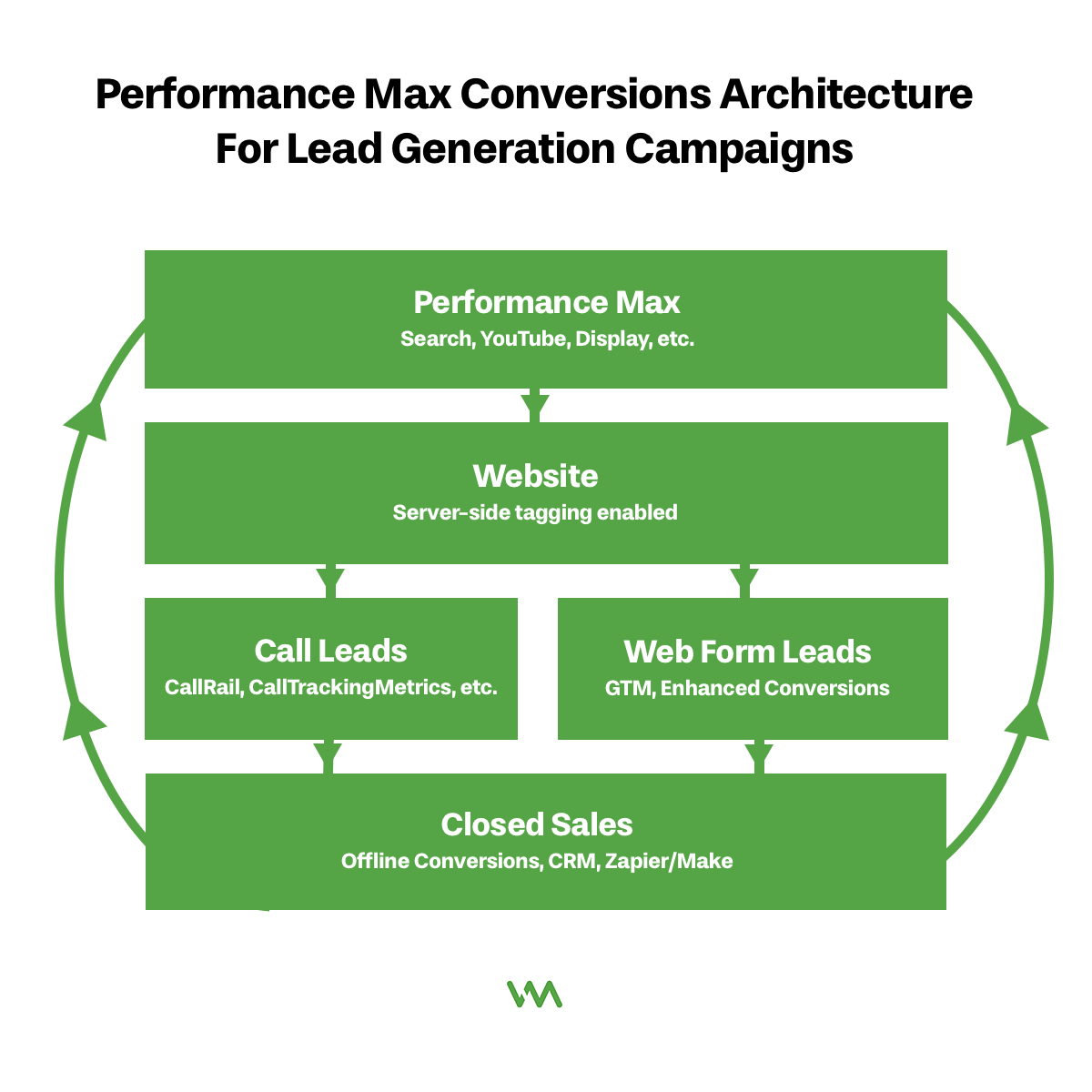
Before you even consider Performance Max for lead gen, you need these foundations in place.
Budget Requirements
Minimum budget recommendations are higher for lead generation than e-commerce. You need at least $1,500-2,000/month, and ideally $3,000+/month. Why? Because you need enough budget to generate 30-50 conversions during the learning phase. At $100 per lead, you need serious spend to hit that threshold. Below these budgets, you're better off with Search campaigns.
Conversion Tracking Requirements
Conversion tracking setup must be comprehensive. You need call tracking through Google's forwarding numbers or a third-party provider. You need form submission tracking. You need proper thank-you pages. If you're missing significant conversions (like people who call without submitting a form), the algorithm optimizes based on incomplete data.
Historical conversion data ideally means 30+ conversions in the last 30 days before launching Performance Max. The algorithm uses your account history to understand what a qualified lead looks like. If you don't have this conversion history, Performance Max is basically guessing during the entire learning phase, which could take months.
Creative Assets & Landing Page Requirements
Creative asset requirements include:
- Multiple images (at least 5)
- Videos (at least 1, ideally 3-5),
- Headlines (5-15)
- Descriptions (5)
- Business name/logo.
Lead generation Performance Max needs these assets to create ads across all placements. You can't just run text-only ads like you can with Search campaigns.
Landing page quality and load speed matter more with Performance Max because it's sending traffic from multiple sources with different intent levels. A landing page that converts 15% of high-intent Search traffic might only convert 3% of YouTube or Display traffic. If your landing page isn't optimized, Performance Max will burn through budget on low-intent placements that never convert.
Common Problems with Performance Max for Lead Generation
Let me be brutally honest about what goes wrong.
Increased Volume, Decreased Quality
Lead quality deterioration is the most common complaint we hear. Businesses switch to Performance Max, lead volume goes up, cost per lead goes down, and everyone celebrates - until they realize the leads are terrible. People who had no intention of hiring your service but clicked an interesting YouTube video. Competitors checking your pricing. Job seekers who think you're hiring. Performance Max counts all of these as successful leads if they fill out your form.
Wasted Spend on Low-Intent Placements
Budget waste on low-intent placements happens when the algorithm discovers that YouTube or Display can generate cheap conversions. It shifts budget away from high-intent Search placements toward cheaper, lower-quality placements. You end up with more leads that close at lower rates, ultimately spending more to acquire each customer even though cost per lead dropped.
Limited Reporting & Transparency
Difficulty identifying which placements drive good leads stems from limited reporting. You can't see "Display Network leads closed at 2% while Search leads closed at 25%." You just see aggregate numbers. Without detailed placement data, you can't tell Performance Max "stop showing on YouTube" - you either run Performance Max everywhere or not at all.
Offline Conversions Gap
The "offline conversions" tracking gap is where most small businesses fail. To truly optimize Performance Max for lead generation, you need to upload offline conversion data (which leads turned into customers) back to Google Ads. This requires CRM integration, technical setup, and ongoing maintenance. Most small businesses don't do this, so the algorithm only sees part of the story.
Conversion Targeting
The ads algorithm prioritizing easy conversions over valuable ones is an inherent risk. Google's algorithm will find the path of least resistance to hit your conversion target. If you set a $100 CPA target and Display Network can generate leads at $60 while Search generates them at $120, the algorithm will choose Display every time - even if the Display leads are worth nothing.
Should I Switch To Performance Max From Search?
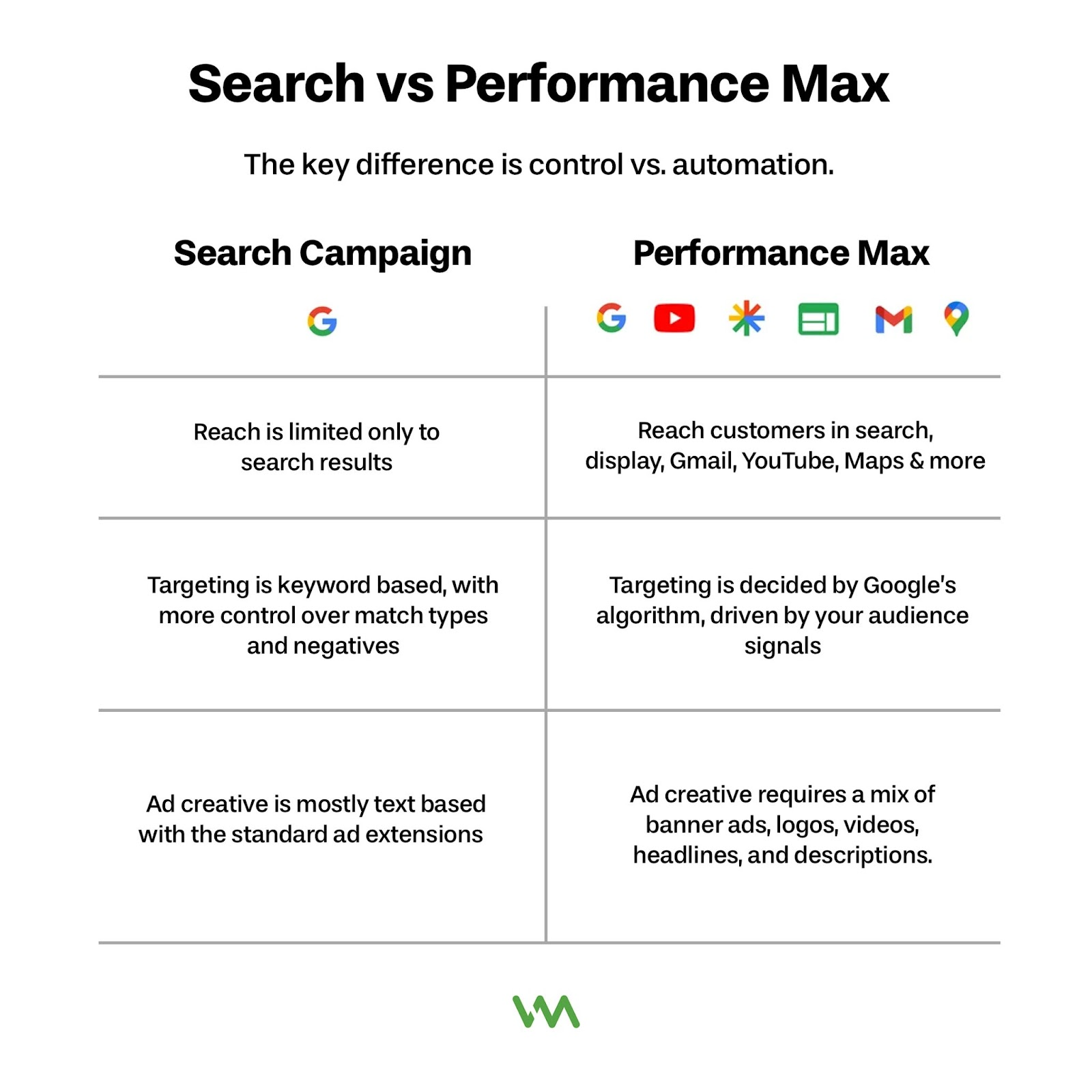
Let's examine a few situations where you may want to stick with Search.
Need Granular Control? Use Search
Control comparison heavily favors Search campaigns. With Search campaigns, you choose your keywords, set match types, see search terms, adjust bids by time of day or location, and exclude placements. With Performance Max, you control almost nothing beyond your goal and your creative assets. For businesses where lead quality is paramount, this loss of control is often unacceptable.
Want Better Lead Quality? Use Search
Lead quality differences generally favor Search campaigns in our experience managing both. Search campaigns target people actively looking for your service right now. Performance Max includes people who might be interested but aren't actively shopping. That difference in intent shows up in conversion rates and sales close rates.
Focusing on Lowering Cost Per Lead? Use Performance Max
Cost per lead expectations can be lower with Performance Max because it finds cheaper placements, but this is misleading if the leads are lower quality. We've seen many accounts where Performance Max delivered 40% more leads at 25% lower cost per lead, but the business actually acquired fewer customers because lead quality tanked.
Have a List of High-Intent, High-Performing KWs? Use Search
When Search campaigns still outperform is typically for businesses with strong keywords, clear customer intent, and simple conversion paths. If people search "emergency plumber [city name]" and call immediately, a well-optimized Search campaign targeted at those high-intent terms will almost always outperform Performance Max's broader approach.
Wait, So Should I NOT Use Performance Max for Lead Gen?
There are some cases where Performance Max can work well for lead gen. A great example would be home services (HVAC, roofing, landscaping), where visual creative helps and there's a long consideration period. Search campaigns dominate for legal services, medical practices, and B2B services, where specific keywords indicate immediate need, and lead quality variation is extreme.
Is My Business The Right Fit for Performance Max Lead Gen?
Performance Max isn't terrible for every lead generation business - some types actually do well with it.
Service Businesses (Like Home Services)
Home service businesses like HVAC companies, plumbers, roofers, and pest control can succeed with Performance Max because they have enough conversion volume to feed the algorithm. If you're closing 50+ jobs per month, the algorithm has enough data to identify patterns and optimize accordingly.
Short Sales Cyle Businesses
Businesses with short sales cycles see better Performance Max performance because the algorithm gets quick feedback. If leads convert to customers within days or weeks, Google can connect the dots between placements and outcomes. If it takes 3 months, the signal is too delayed.
Businesses With Solid Conversion Tracking (Online & Offline)
Companies with strong conversion tracking that feed offline conversion data back to Google Ads can make Performance Max work. If you're uploading which leads turned into customers and what they spent, the algorithm can actually optimize for customer acquisition, not just lead generation.
Businesses With Clearly Defined Lead Values
Services with consistent lead values avoid the "cheap leads are worthless leads" problem. If every lead has similar value (like a dental cleaning), Performance Max optimizing for cheap leads isn't as risky. It's when lead value varies wildly (like legal services) that Performance Max struggles.
B2B vs B2C
B2C vs. B2B considerations matter significantly. B2C services (targeting homeowners, for example) often do better with Performance Max because the audience is broader and visual creative resonates. B2B services targeting specific job titles or company types usually do better with Search campaigns, where you can target precise intent.
Businesses That Should Stick To Search
Some businesses should avoid Performance Max for lead generation entirely.
High-Ticket B2B Companies
High-ticket B2B services like consulting, enterprise software, commercial construction, or professional services targeting specific industries need precise targeting that Performance Max doesn't offer. When a single customer is worth $50,000+, you can't afford to waste budget on unqualified leads.
Businesses With Long Sales Cycles (> 30 Days)
Complex sales cycles over 30 days mean the algorithm never gets clear feedback on what's working. By the time a lead turns into a customer 90 days later, Performance Max has tested dozens of other variations and moved on. The signal is too delayed to be useful.
Niche Professional Services
Niche professional services like specialized medical practices, specific legal practice areas, or technical consulting need to reach very specific audiences. Performance Max's broad net approach wastes budget on reaching people who will never become customers.
Low-Budget or Volume Businesses
Businesses with small monthly lead targets (like needing 5-10 leads per month) don't generate enough conversion volume for Performance Max to optimize. You need volume for the algorithm to learn. If you only need a handful of high-quality leads, manual Search campaigns give you better control.
Businesses with Zero Tracking or Conversions
Companies without a robust tracking infrastructure shouldn't use Performance Max. If you can't track phone calls, if your CRM doesn't integrate with Google Ads, if you have no way to report offline conversions - you're flying blind. The algorithm will optimize toward whatever it can measure, which might have no correlation with your actual business results.
How to Set Up Performance Max for Lead Generation Success
If you're moving forward with Performance Max for your lead generation campaigns, here are a few quick tips:
Architect Your Campaigns by Asset Group & Service Line
Campaign structure best practices mean keeping it simple. Most service businesses should run 1-2 Performance Max campaigns, each with 2-5 asset groups. Don't create separate campaigns for every service or every location - you'll spread the budget too thin for the algorithm to learn anything.
Asset group organization by service line makes the most sense for most businesses. If you offer both residential and commercial services, separate asset groups let Performance Max learn the different audiences and messaging. If you have three distinct service categories with different economics, split them into separate asset groups within one campaign.
Center Your Copy & Creative Around Problem Solving
Writing effective creative for lead generation is different from e-commerce. Your headlines should emphasize speed, expertise, local presence, and trust rather than discounts or features. "24/7 Emergency Plumbing Service in [City]" works better than "Professional Plumbing Services." Your descriptions should address common concerns and clearly state your differentiators.
Feed The Campaign The Right Signals
Audience signals that improve lead quality include:
- Uploading your customer list (if you have one)
- Website visitors from high-intent pages (like service pages or contact pages, not blog posts)
- Custom audiences based on in-market or affinity categories relevant to your service.
Better signals help Performance Max find similar people, improving lead quality from day one.
Don’t Forget Negatives & Exclusions
Negative keywords and content exclusions still matter even though you have less control. Add negative keywords for common irrelevant terms like "jobs," "salary," "DIY," "how to," and competitor names. Exclude sensitive content categories to avoid having your ads appear next to inappropriate content. This won't eliminate all waste, but it helps.
Already Working With An Agency? Here’s What They Should Be Looking Out For
Hold your agency accountable for tracking what actually matters.
Lead Quality
They should be reporting lead quality (ideally tracking which leads close), placement performance (where budget is going), creative performance (which assets work), audience signal effectiveness, and total account performance (not just Performance Max in isolation - did overall customer acquisition improve?).
Placement Performance
Placement performance is limited in Performance Max, but you can see aggregated data by channel (Search, Display, YouTube, etc.). Your agency should be analyzing this and providing recommendations, even though you can't make granular adjustments.
Asset Performance
Asset performance and testing should happen monthly. They should be replacing low-performing creative, testing new messaging angles, trying different video approaches, and continuously improving the asset library that Performance Max uses.
Conversion Lab & Attribution
Conversion lag and attribution windows need to be understood and explained. If your average lead takes 2 weeks to close, you can't evaluate this week's performance until 2 weeks from now. Your agency should be accounting for this lag in its reporting.
Questions to ask during performance reviews:
- What's our lead-to-customer conversion rate from Performance Max vs. Search?
- Which placements are driving most of our spend?
- What's our customer acquisition cost, not just cost per lead?
- Are Performance Max leads incremental or cannibalizing other campaigns?
- What creative changes are you testing this month?
Performance Max Is a Choice: Choose Wisely
Here's what most Google reps and some agencies won't tell you: Performance Max for lead generation works beautifully for some businesses and terribly for others. It's not a question of whether you're "doing it right" - it's a question of whether your business model fits the way Performance Max operates.
If you have high volume, strong tracking, offline conversion integration, and consistent lead values, Performance Max can work well. If you have low volume, complex sales cycles, huge variation in lead quality, and limited tracking capabilities, Search campaigns will almost always perform better.
Success depends heavily on tracking and budget. Without robust tracking that feeds performance data back to the algorithm, you're essentially gambling. Without sufficient budget to generate enough conversions for learning, the algorithm never gets smart enough to deliver results.
Consider a hybrid approach where you maintain Search campaigns for high-intent keywords and core services, and run Performance Max as an incremental channel for discovery and awareness. This lets you get the best of both worlds without putting all your eggs in the automation basket.
If you're trying to decide whether Performance Max makes sense for your lead generation business, schedule a consultation with our team. We'll review your current campaign structure, conversion tracking, and business model to give you an honest assessment of whether Performance Max is worth testing.
