


When AI Led Me Right Back to Local SEO
Last month, I needed to find a reliable HVAC contractor for our office building. Like many people these days, instead of defaulting to a local SEO search via Google, I decided to try ChatGPT first.
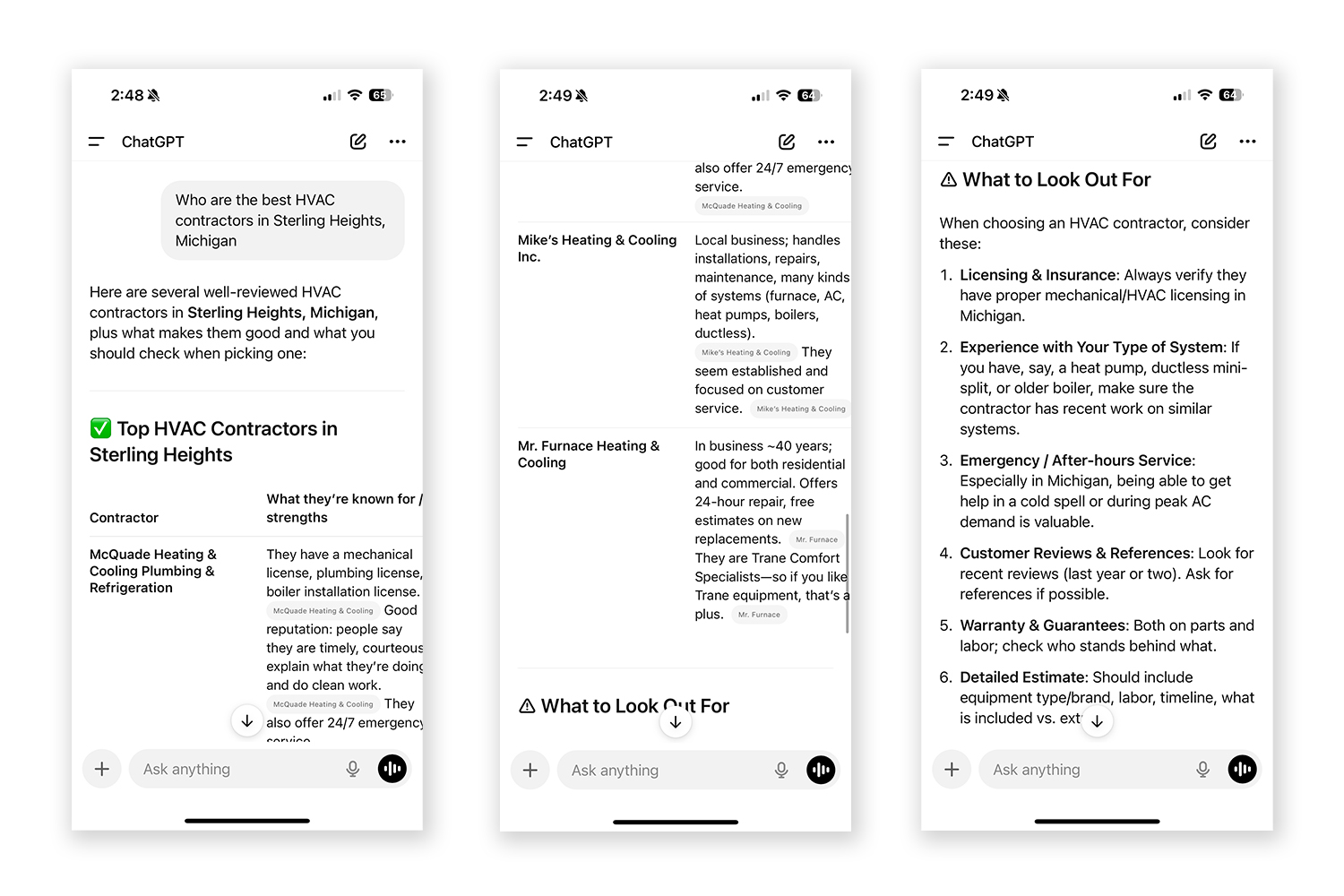
"Who are the best HVAC contractors in Sterling Heights, Michigan?" I asked.
The response was... fine. It gave me a generic list with some decent companies, but something was missing. No phone numbers I could quickly tap. No real customer photos of their work. No way to immediately see which ones were actually open right now or how close they were to my location.
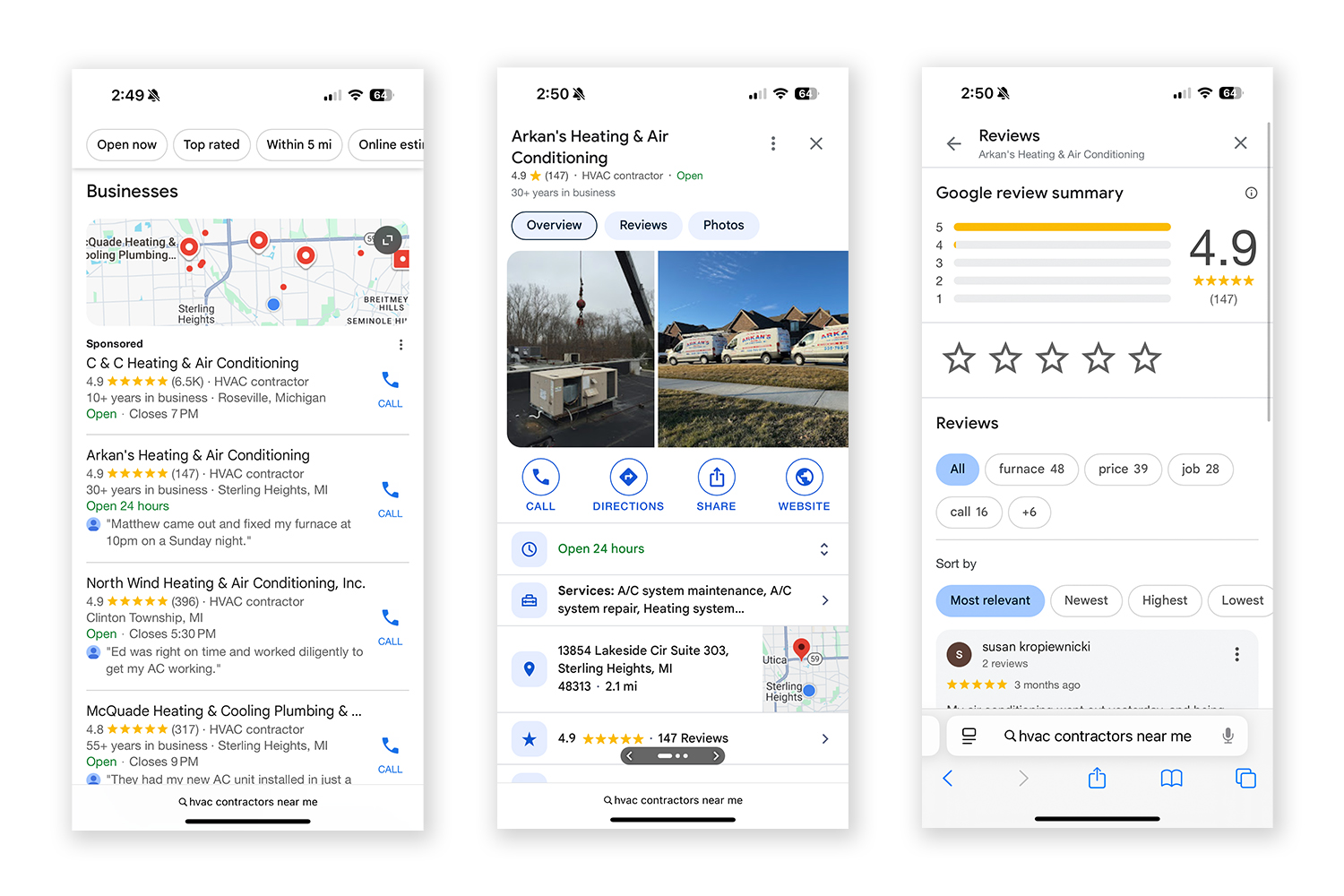
So what did I do next? I went straight to Google Maps and typed "HVAC contractors near me."
Suddenly, I had everything I needed: real reviews from real customers, photos of actual work, click-to-call buttons, driving directions, and business hours. Within minutes, I had called three contractors and scheduled estimates.
This experience got me thinking: while everyone's panicking about AI disrupting digital marketing, local businesses might just have the ultimate secret weapon.
The SEO Apocalypse That Isn't Touching Local Business
If you've been following digital marketing news lately, you've probably heard the doom-and-gloom stories. AI is supposedly killing SEO. Websites are seeing fewer clicks even as their content shows up in more searches. The infamous "alligator graph" - where impressions go up but clicks go down - is haunting content creators everywhere.
But here's what the data shows: businesses that depend on local intent are seeing steady performance, with no signs of the "alligator graph" that plagues other categories.
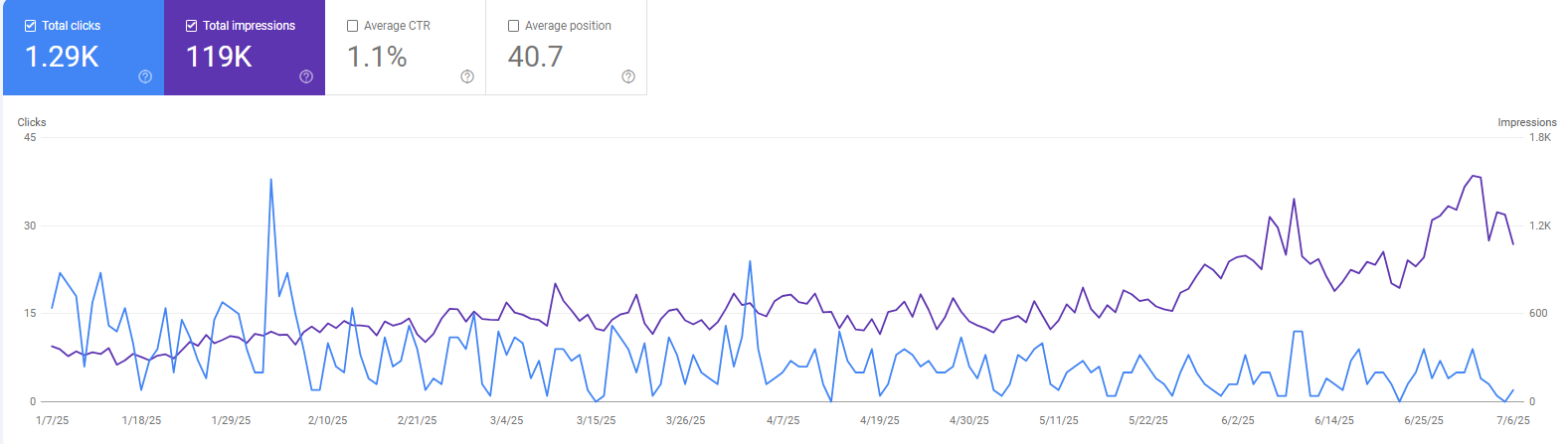
While bloggers and national brands scramble to figure out how to compete with AI-generated answers, local businesses are quietly thriving. Your neighborhood restaurant, the plumber down the street, and the dental practice across town? They're doing just fine.
Why? Because local SEO operates by completely different rules.
Four Reasons Local SEO Thrives While Others Struggle
1. AI Can Give Advice, But It Can't Fix Your Sink
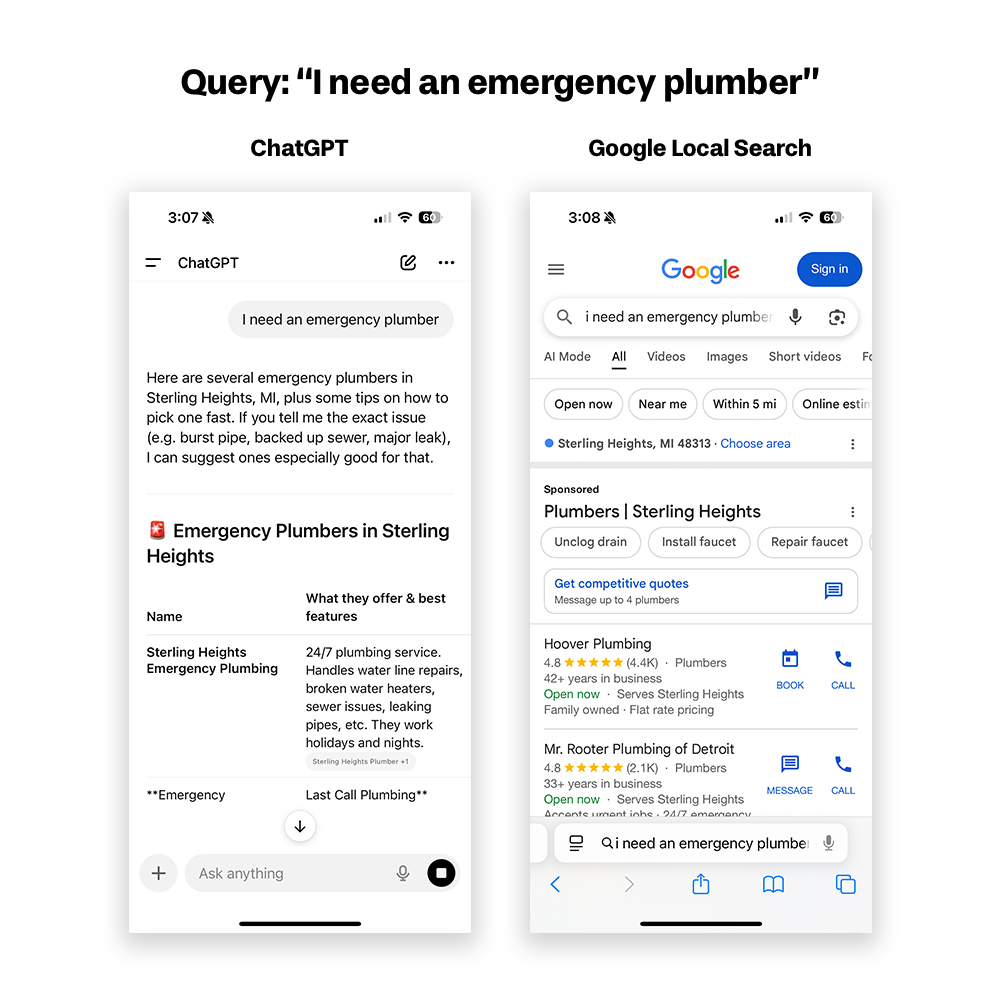
Here's the fundamental difference: local searches often lead to phone calls, in-person visits, or service appointments—not just website clicks.
When someone searches "pizza near me," they're not looking for an essay about pizza-making techniques. They want to order food. When they search "emergency plumber," they need someone who can actually show up at their house with tools.
AI is fantastic at explaining how to unclog a drain or describing the symptoms of a broken water heater. But when your basement is flooding at 2 AM, you need a real human being with a van full of equipment.
This is why Google rarely includes AI Overviews in local search results. Google understands that for local queries, people need action, not information.
2. Location Is Everything (And AI Is Geographically Clueless)
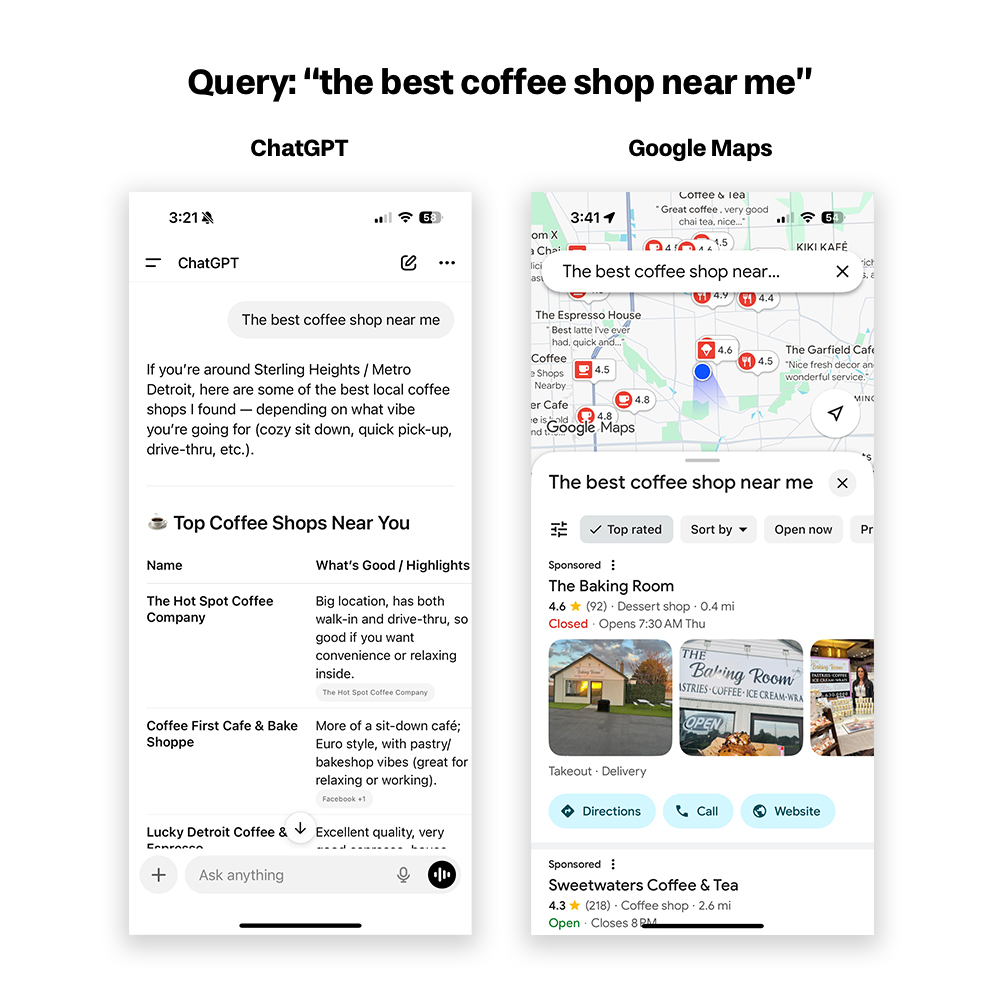
Generative AI doesn't know where you're searching from – at least not without you telling it explicitly.
Try this experiment: ask ChatGPT or Claude for "the best coffee shop near me." You'll get a generic response asking for your location, followed by general advice about what makes a good coffee shop.
Now search "coffee near me" in Google Maps. You'll instantly see every coffee shop within walking distance, complete with live hours, current wait times, and photos of today's menu specials.
Most searchers won't bother entering their exact address just to get AI-powered suggestions. The friction is too high when traditional search gives them exactly what they need in half the time.
Even if AI platforms eventually solve this location problem, they're still missing something crucial.
3. AI Is Only As Good As Its Local Data Sources (Which Come From Your SEO Work)
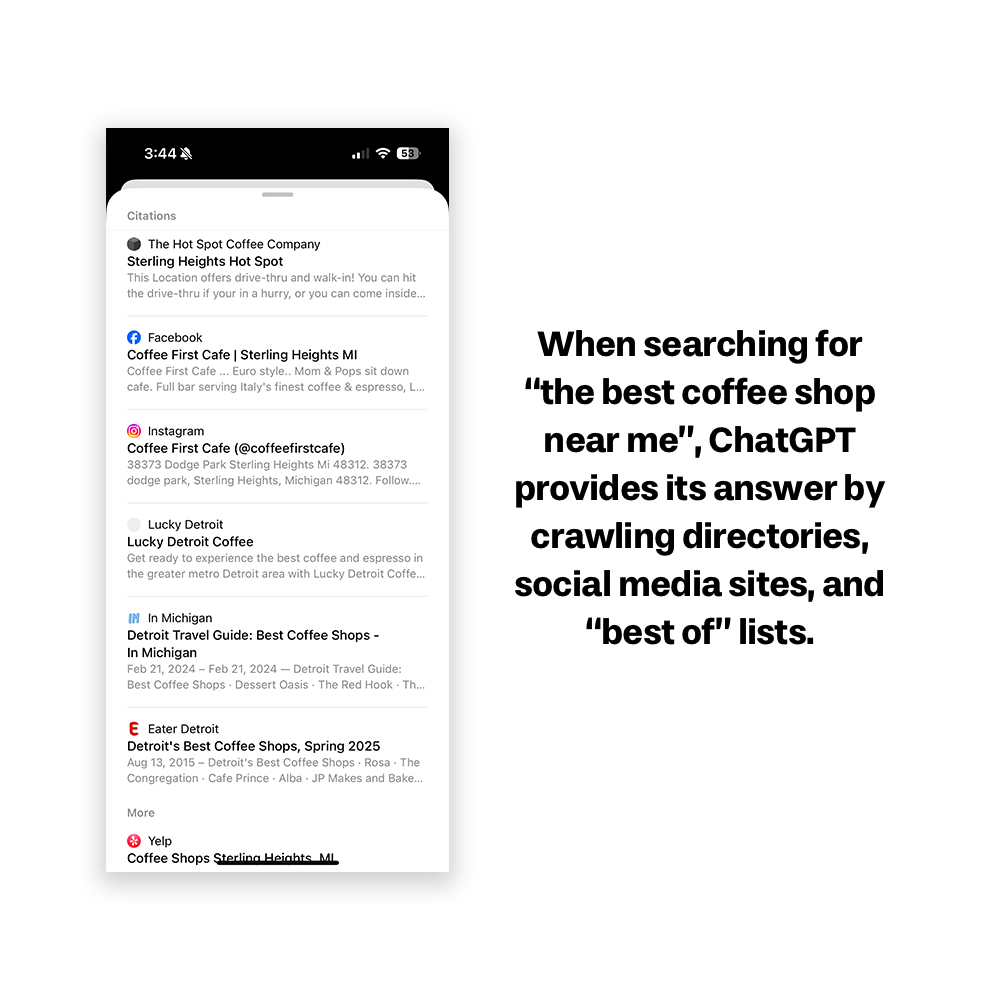
Here's a dirty little secret about AI and local search: these models don't generate original local knowledge. They aggregate and summarize structured data from platforms like Google, Yelp, TripAdvisor, and others.
When ChatGPT recommends a restaurant, where do you think that recommendation comes from? Yelp reviews. Google Business Profile data. TripAdvisor ratings. Directory listings.
In our own testing at Verde Media, when we asked AI platforms for local service providers, we often got a Yelp "best of" list, Google Business Profile data including review counts and ratings, and Google Maps links for directions.
All those hours you've spent optimizing your Google Business Profile, building citations, and encouraging customer reviews? That work doesn't disappear in the AI era - it becomes more valuable. AI platforms are essentially giving your existing local SEO efforts a bigger megaphone.
4. Local SEO Was Already Built for the Multi-Platform World
Long before anyone was talking about "Search Everywhere Optimization," local businesses understood a basic truth: you need to be discoverable everywhere your customers might look.
Successful local SEO has always meant showing up on:
- Google Business Profiles
- Yelp and industry-specific review sites
- Local directories and chambers of commerce
- Apple Maps and other mapping platforms
- Social media platforms with location features
These touchpoints are exactly where AI tools look for signals. If your business is consistently represented across these platforms, you're already aligned with how AI gathers and validates information.
The businesses that built comprehensive local presence years ago aren't scrambling to adapt to AI - they're perfectly positioned for it.
What This Means for Your Business Right Now
Instead of worrying about AI disruption, local business owners should be doubling down on what's already working. Here are four specific steps you can take this month:
Complete Every Profile, Everywhere
Don't just focus on Google. Fill out your profiles completely on Yelp, Facebook, industry directories, and any platform where your customers might discover you. AI platforms pull from all these sources.
Make Consistency Your Obsession
Ensure your business name, address, phone number, hours, and services are identical across every platform. Inconsistent information confuses both search engines and AI systems.
Reviews Aren't Just Nice to Have - They're Your AI Fuel
LLMs depend on fresh, authentic, user-generated content. Regular reviews help your business stand out in AI-powered recommendations. Focus on getting reviews across multiple platforms, not just Google.
Create Location-Specific Content
Build pages that target the specific cities and neighborhoods you serve. These location-focused pages are gold mines for both traditional search and AI platforms trying to understand your service area.
The Bottom Line: Local SEO Isn't Just Surviving AI - It's Getting Stronger
While content creators and national brands figure out how to compete with ChatGPT, local business owners have a clear advantage. AI can't replace the core human needs that drive local search: proximity, immediacy, and real-world action.
Local SEO isn't just surviving the generative AI shift – it's thriving.
The businesses that understand this and invest in comprehensive local presence won't just survive the AI revolution - they'll dominate it. While their competitors worry about algorithm changes and AI disruption, smart local business owners will be focusing on the fundamentals that have always worked: being helpful, being findable, and being trustworthy in their communities.
The future of search might be uncertain, but the future of local search is bright. Your customers will always need someone who can actually show up and solve their problems. AI can talk about fixing things - but you're the one with the truck, the tools, and the expertise to actually get the job done.
And that's an advantage no algorithm can replicate.
