


The Shift You Haven't Noticed
Chances are, you've already seen it without realizing it. That Instagram post that showed up in your Google search results last week. The Reel that appeared when you searched for a local business. The carousel post that answered your "how to" question better than any traditional article.
These aren't accidents or glitches—they're the new reality of search. On July 10, 2025, Instagram made it official: public content from professional accounts can now be indexed by Google and other search engines. What was once a walled garden has become part of the open web.
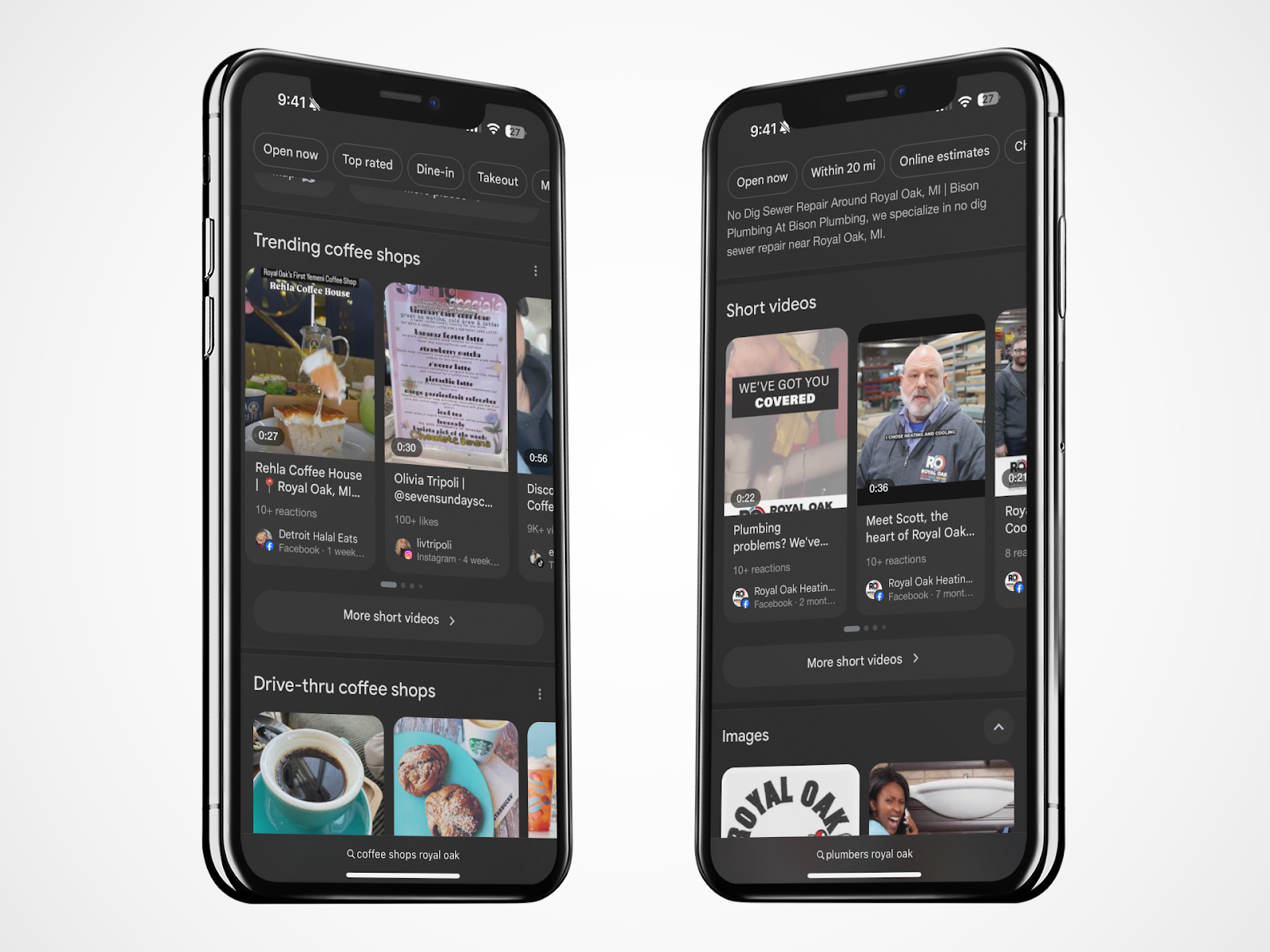
For most business owners, this change has flown completely under the radar. They're still posting on Instagram thinking about followers, likes, and engagement rates. Meanwhile, their content is now competing in Google search results alongside websites that cost thousands of dollars to build and optimize.
The businesses that recognize this shift first will have an enormous advantage. While competitors continue treating Instagram as just another social platform, early adopters are turning their posts into search-optimized content that works twice as hard—engaging social followers and attracting new customers through Google searches.
The question isn't whether this change will affect your business. The question is whether you'll adapt your strategy before or after your competitors do.
What Actually Changed?
The Technical Shift
Let's break this down in simple terms. When we talk about Google "indexing" content, think of it like adding books to a giant library catalog. Until recently, Instagram was like a private library—people could visit if they knew where to look, but the books weren't listed in the main catalog system that librarians (Google) used to help people find information.
Instagram has historically kept its content mostly hidden from Google's index, even using robots.txt files and noindex tags to politely tell search engines "hands off". While Google still managed to sneak some Instagram content into search results over the years, it wasn't official, and it wasn't comprehensive.
Now, as of July 10, 2025, Instagram is officially cracking open its once-private ecosystem to boost discoverability beyond the app. This means your content is being added to that giant library catalog, making it searchable by anyone, anywhere, whether they use Instagram or not.
What Gets Indexed
Here's what you need to know about what content becomes searchable:
What's Included:
- Posts, Reels, carousels, and videos from public, professional accounts (business and creator profiles)
- Content from users over 18 years old
- Photos and videos from public reels and posts that were uploaded or posted from January 1, 2020 onwards
What's Excluded:
- Stories (they remain private to the platform)
- Content from personal accounts
- Content from private profiles
- Content from users under 18
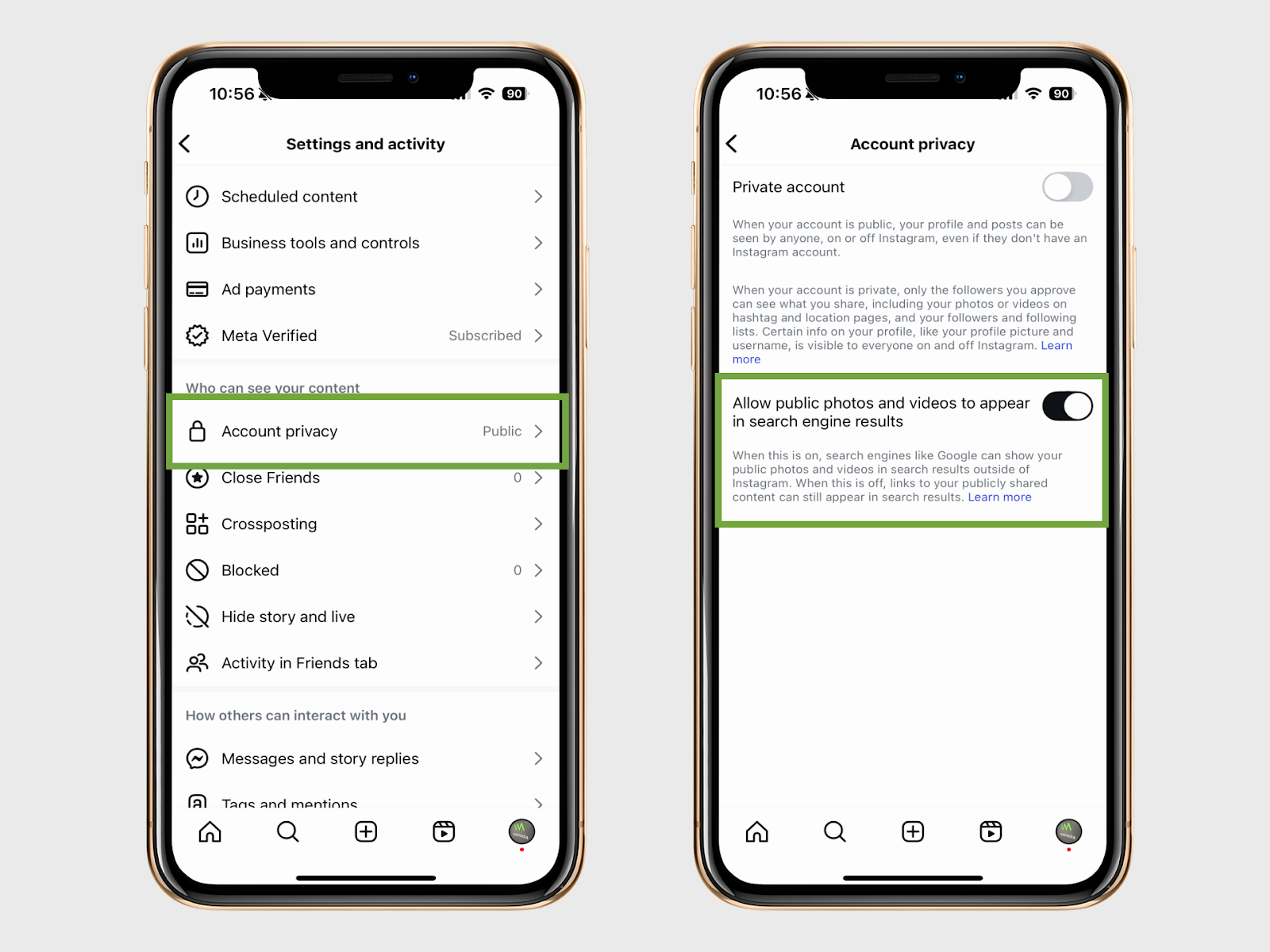
The Control Factor: Professional account holders can toggle the feature through Settings → Privacy, where they'll find "Allow public photos and videos to appear in search engine results". You're automatically opted in, but you can opt out if you prefer to keep your content within Instagram's ecosystem.
Why This Matters
This change transforms social media posts into long-term SEO assets. Previously, your Instagram content had a relatively short lifespan—it might be seen for a few days or weeks within the app, and then it would fade into your archive. Now, that content can continue attracting new visitors months or even years after you post it.
According to SEOZoom, nearly 40% of search results now feature at least one piece of social content, and this percentage is only going to grow. Your business can no longer afford to think of social media and search engine optimization as separate strategies.
Blurred The Lines Between Search & Social
Your Instagram Is Now a Website Extension
This shift fundamentally changes how we think about content creation. Short videos and visuals can now potentially outrank traditional articles if they align better with search intent. A well-optimized Instagram Reel showing how your product works could appear higher in search results than a competitor's detailed blog post.
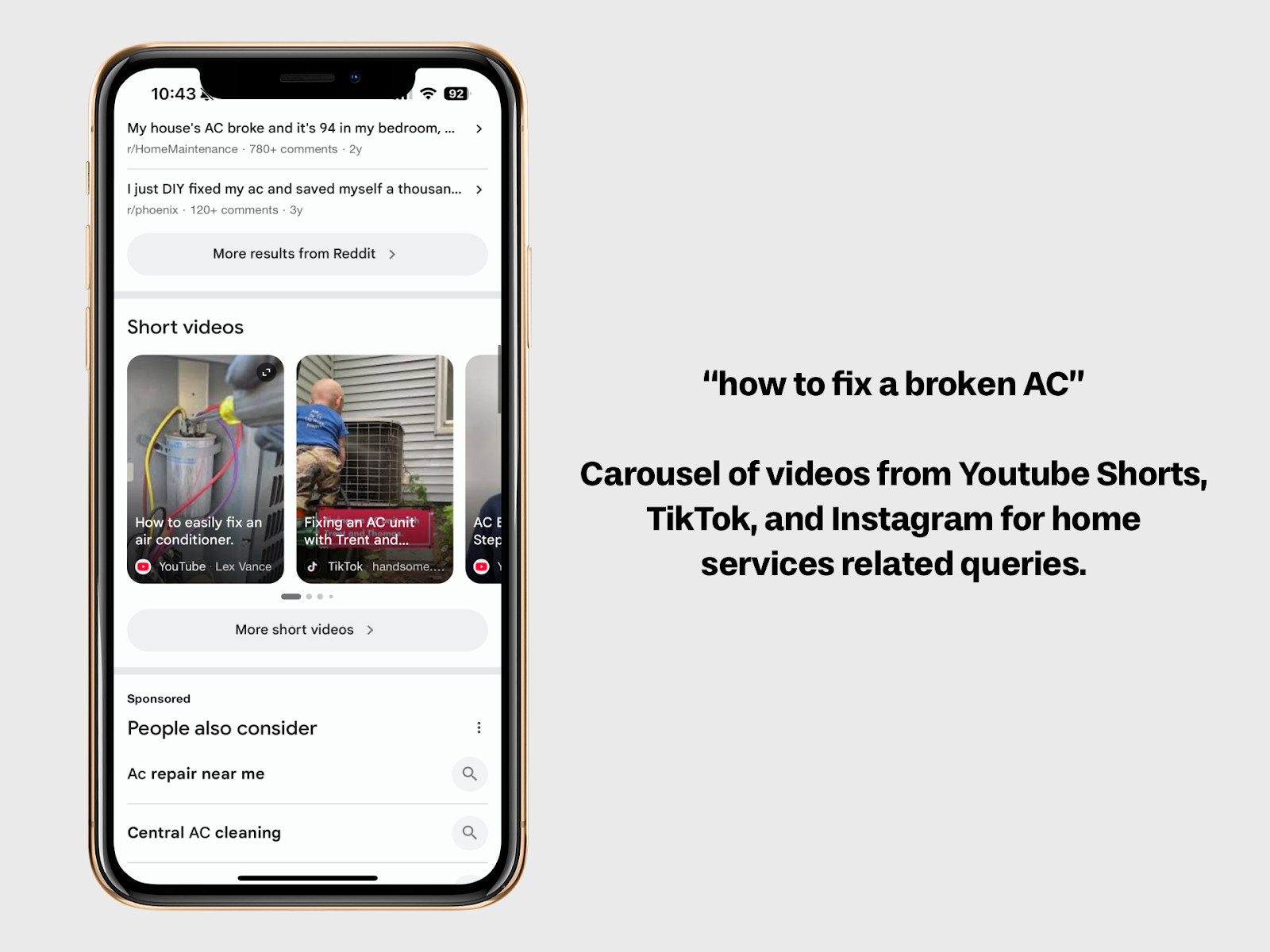
Think about what this means for your business. Every Instagram post you create is now a potential entry point for new customers. For small businesses and creators, this is a chance to get in front of new eyes without additional ad spend. Your content can now reach people who might never have found you within Instagram's ecosystem.
Search Behavior Is Changing
According to Forrester, 32% of users in the US have used Instagram in the last month to search for content. People, especially younger generations, are increasingly using social media platforms as search engines. They're looking for "NYC brunch spots" on Instagram instead of Google, seeking authentic, visual recommendations from real people rather than traditional business listings.
Google's indexing of Instagram content is partly a response to this trend. Google has been increasingly blending in videos and images for certain searches, and now Instagram content can compete directly in these visual search results.
Real Examples of Impact
Here are some real-world examples of how this is already playing out:
- A local gym's Instagram video on proper squat form could appear when someone searches "how to squat properly"
- A wedding photographer's portfolio photo could surface in a Google Image search for "Detroit wedding photographer"
- A restaurant's Reel showing a signature dish might rank in search results for "best brunch in Royal Oak"
In Italy alone, Instagram appears for over 669,000 keywords, with more than 600,000 Reels showing up in search results. When Instagram content ranks, it performs well—often landing in Google's top 10 results.
Adjusting To The New Reality
Content Permanence
The biggest challenge many businesses face is adjusting to the permanence of social content. Previously, if you posted something on Instagram that didn't represent your brand perfectly, it would eventually fade from view. Now, that content could potentially show up in search results for years to come.
This means you need to consider both your immediate social media audience and potential future search visitors when creating content. A casual post that works great for your followers might not make the best impression on someone discovering your business for the first time through a Google search.
Privacy and Control Concerns
Professional accounts are automatically opted in to indexing, which means content you posted with only your Instagram followers in mind could now be visible to anyone searching Google. While you can opt out, many business owners aren't even aware this change has happened.
There's also the question of context. Your Instagram content was designed to be seen within the Instagram app, where viewers understand the social media context. When that same content appears in Google search results, it might be interpreted differently by someone who stumbles across it without that context.
Competition Intensifies
Early adoption of Instagram indexing optimization provides first-mover advantages in search results. This means businesses that start optimizing their Instagram content for search right now will have a significant advantage over competitors who wait.
You're now competing not just with other businesses in your industry, but with anyone creating content around your keywords. A skilled content creator with great Instagram optimization could potentially outrank established businesses that haven't adapted their strategy yet.
Capitalizing On Social Through Search
New Traffic Sources
Instagram is no longer a walled garden; your social media content can become a discoverable asset on the wider internet. This creates entirely new pathways for people to find your business. Someone who doesn't use Instagram, or someone who rarely opens the app, can now discover your content through a simple Google search.
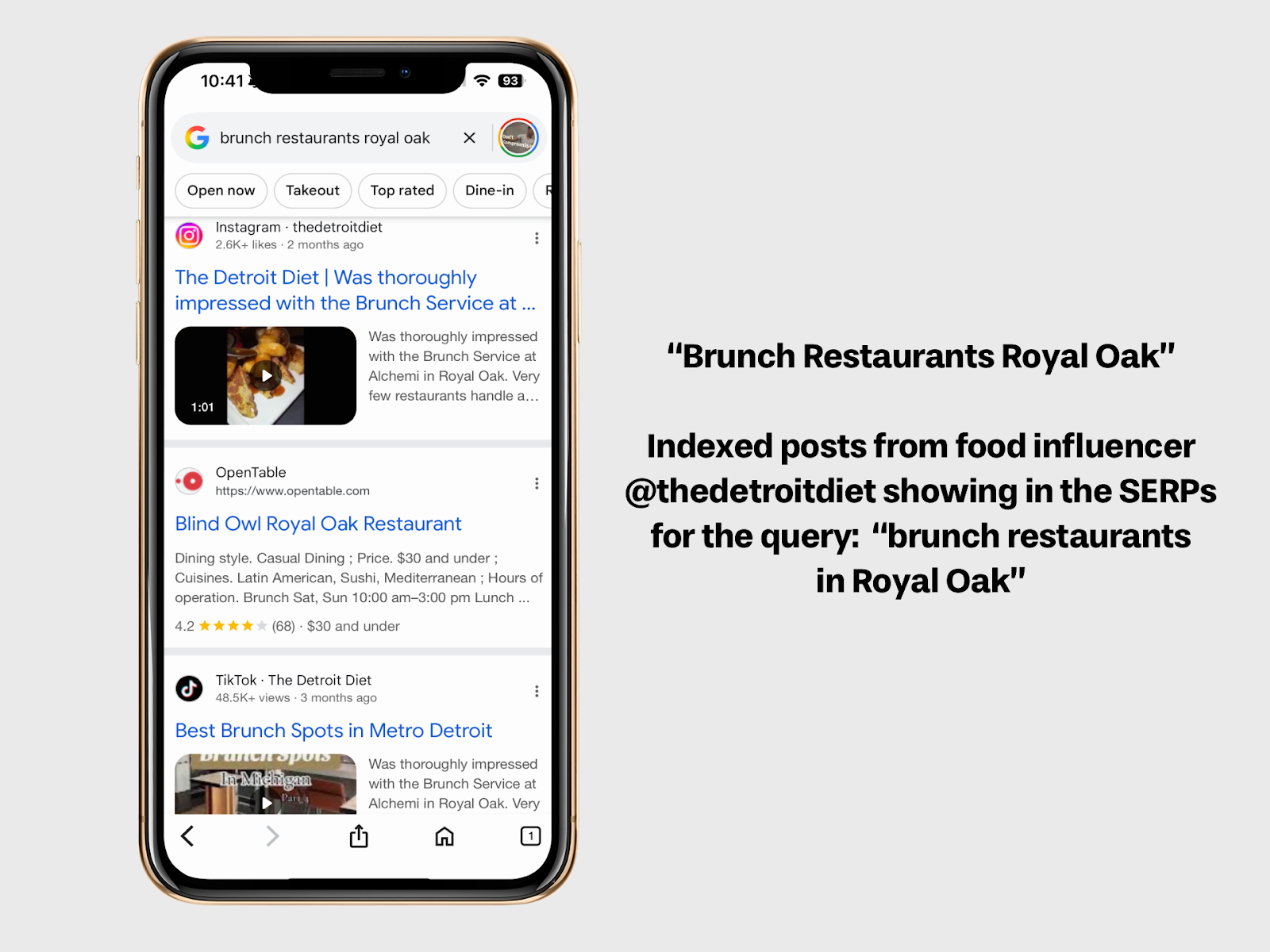
For businesses that have invested heavily in Instagram content over the years, this represents a massive expansion of that content's potential reach. Every well-crafted post, every informative Reel, every behind-the-scenes video can now work harder for your business.
Cost-Effective Marketing
This change allows you to get more value from your existing content creation efforts. Content that shows up on Google creates a second channel for discovery beyond social media, effectively doubling the potential return on investment for every piece of content you create.
Instead of having to create separate content strategies for social media and search engine optimization, you can now create content that serves both purposes. A single Instagram post optimized correctly can engage your existing followers while also attracting new customers through search.
Local Business Advantages
Local businesses stand to benefit enormously from this change. Visual content performs exceptionally well for local searches—people want to see what your restaurant looks like inside, how your products appear in real life, or what your workspace environment feels like.
Geotags tell search engines where your business operates and help local SEO. When you consistently tag your business location in posts, you're providing Google with clear signals about your local relevance, which can help you appear in location-based searches.
Updating Your Current Social Media Workflows
Immediate Action Items
1. Audit Your Current Content
Before you start optimizing for search, take a comprehensive look at your existing Instagram content. Review your recent posts and ask yourself: "If someone found this through a Google search, would it make a good first impression of my business?"
Look for content that might not represent your brand well in a search context and consider archiving or deleting it. Remember, content posted from January 1, 2020 onwards is eligible for indexing, so you have several years' worth of content to review.
2. Check Your Settings
Go to Instagram Settings → Privacy → Search Engine Indexing and ensure it's enabled if you want your content to be discoverable. Professional accounts are opted in by default, but it's worth double-checking.
3. Optimize Your Profile
Use clear language about who you are, what you do, and where you serve. For example: "High-end home renovations in Pittsburgh, PA. Specializing in kitchen, bathroom, and basement remodels". Your bio should include target keywords that align with how your audience searches, both within Instagram and on Google.
Content Creation Strategy Updates
1. Write for Two Audiences
Social posts need more than just flashy visuals. To boost visibility, make sure captions and descriptions answer real user questions and align with search queries. When crafting captions, think about what your audience is searching for, and match that intent with valuable, concise copy.
The first line of Instagram captions now operates similarly to webpage titles in search results. Make those opening words count by including your primary keywords and clearly stating what the post is about.
2. Master Keyword Integration
Instead of posting "new install today 🔨," try something like: "New roof installation in Mt. Clemens, MI using Owens Corning shingles. Another durable upgrade from our Macomb County based roofing team". This approach mentions your location, service type, and brand name, helping search engines connect your post with relevant queries.
Research what your customers actually search for, not what you call your services internally. "Instead of relying on what you would call yourself or your service offerings, think about the words your target audience would use to describe or search for you".
3. Visual Optimization
Alt text descriptions provide additional searchable content that search engines can process. These descriptions serve dual purposes: improving accessibility for users with visual impairments and supplying contextual information for search algorithm understanding.
Subtitles, text overlays, and clear on-screen messaging ensure your content is accessible and optimizable by search engines. Remember that social content often works without sound, which is actually a huge SEO advantage—search engines can read text overlays and subtitles.
4. Hashtag Strategy Evolution
In the world of SEO, hashtags are starting to function as a form of meta keywords. This is a throwback to old-school SEO tactics, but it's now relevant again for social content.
Use up to 5 quality hashtags, focusing on long-tail options rather than big generic keywords. This isn't about clickability or searchability anymore—this is about indexing, similar to metadata.
Content Planning Changes
1. Think Evergreen
Posts with lasting value (how-tos, product highlights, FAQs) may now have longer search shelf life. While trending content still has its place for immediate engagement, you should also create content that will remain valuable and searchable months or years from now.
Consider creating content that answers common customer questions, showcases your expertise, or provides valuable information that doesn't become outdated quickly. This type of content is more likely to attract search traffic over time.
2. Cross-Team Collaboration
The person writing your blog content should understand the keywords your social team is targeting—and vice versa. When you treat every post as a discoverable asset, you create a system that builds visibility over time.
To maximize the SEO value of social media content, collaboration with your social media teams is key. Work together to craft content based on both search volume and product requirements.
Monitoring and Measurement
1. Track New Metrics
Look for traffic spikes to your social profiles from organic Google search. You won't get full analytics from Google Search Console for your Instagram posts, but you can monitor indirect indicators of success.
2. Use Search Tools
Use advanced search operators with Instagram URLs on Google, like: "YourBrandName" site:instagram.com. This will show you which of your Instagram content is appearing in Google search results.
Set up Google Alerts for your brand name combined with Instagram to track when your content is being referenced or linked to from other websites.
The Bottom Line
We're witnessing a fundamental shift in how people discover businesses online. The lines between SEO and social media marketing are blurring, and businesses that recognize this early will have significant competitive advantages.
Your Instagram content is no longer just about engaging your current followers—it's about being discovered by potential customers who might never have found you otherwise. Every post is now an opportunity to show up in search results, answer customer questions, and showcase your expertise to a global audience.
The businesses that will thrive in this new landscape are those that start treating their Instagram posts like searchable web content right now. They're optimizing captions for search intent, adding descriptive alt text, using strategic hashtags, and creating evergreen content that serves both their social audience and search visitors.
Don't wait for your competitors to figure this out. The opportunity window for early advantage is open now, but it won't stay that way forever. Start auditing your content, optimizing your posts, and treating your Instagram strategy as an extension of your SEO efforts.
The future of search is visual, social, and happening right now. Make sure your business is part of it.
