


The Search That Changed Everything
Last weekend during a family get-together, I asked my nine year old niece to help me find a pizza place for dinner. Instead of searching on her tablet, she simply asked Siri: "What's the best pizza place near me?"
Within seconds, she had her answer: ratings, hours, phone number, and even the estimated delivery time – all without clicking on a single website. She handed me her tablet and the pizza was on the way within a few minutes later.
This simple interaction represents a massive shift happening right under our noses. In 2024, nearly 60% of Google searches ended exactly like this – with people getting their answers without ever visiting a website. If you're a business owner wondering why your website traffic isn't what it used to be, or why your SEO efforts seem to be generating fewer clicks, you've just discovered the reason.
But here's the thing: this isn't bad news. It's just different news. And the businesses that understand how to adapt to this new reality are the ones that will dominate their markets in 2025 and beyond.
What Are Zero-Click Searches? (The Simple Explanation)
Let me explain zero-click searches with an analogy: imagine you're at a library looking for information about starting a garden. In the old days, the librarian would point you toward the gardening section and you'd spend time browsing through books until you found what you needed.
Now, imagine a super-helpful librarian who not only knows exactly which page of which book has your answer, but actually reads you the relevant paragraph on the spot. You get your information instantly, without ever touching a book. That's essentially what Google (and other search engines) are doing with zero-click searches.
When someone searches for "business hours for Sahara Grill" or "how to remove sticker residue," Google increasingly provides the answer directly on the search results page instead of sending people to websites. The user gets what they need, Google keeps them happy, and the website that provided the original information... well, that's where your potential clicks have gone.
The Main Types of Zero-Click Results You're Already Seeing
If you've used Google in the past year, you've definitely encountered these, even if you didn't know what to call them:
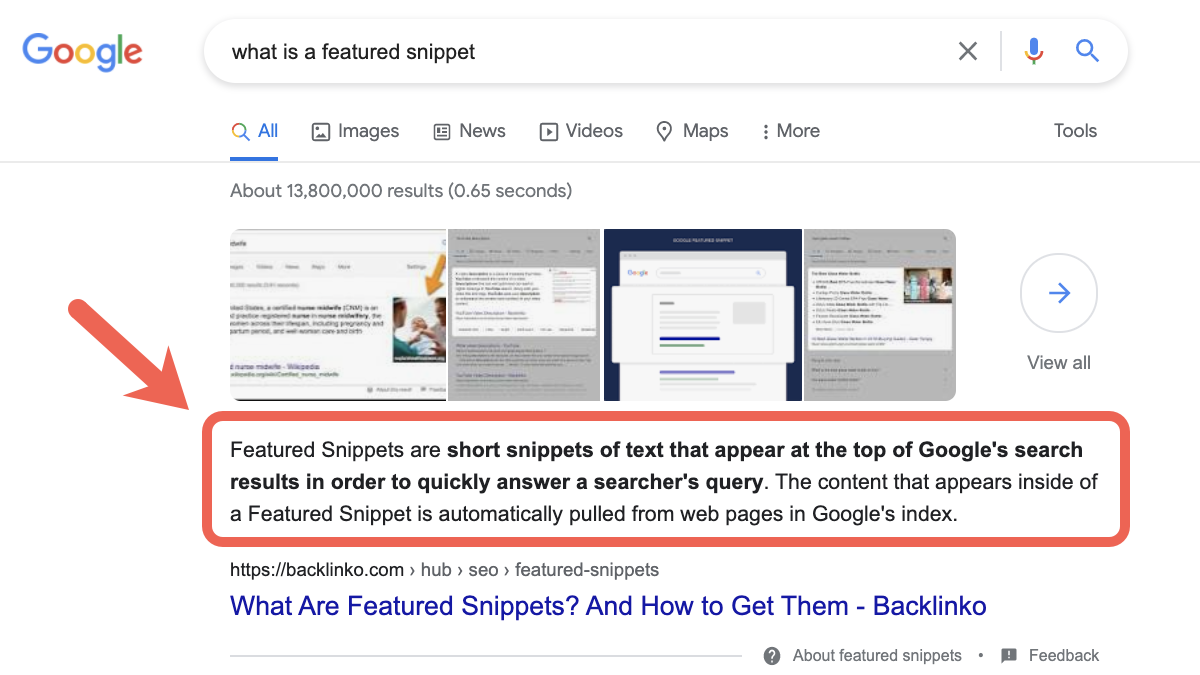
Featured Snippets are those highlighted answer boxes that appear at the top of search results – think of them as Google's "cheat sheet" that pulls the most relevant answer from a website and displays it prominently. When someone searches "how long to cook a turkey," that box showing "15-20 minutes per pound at 325°F" is a featured snippet.
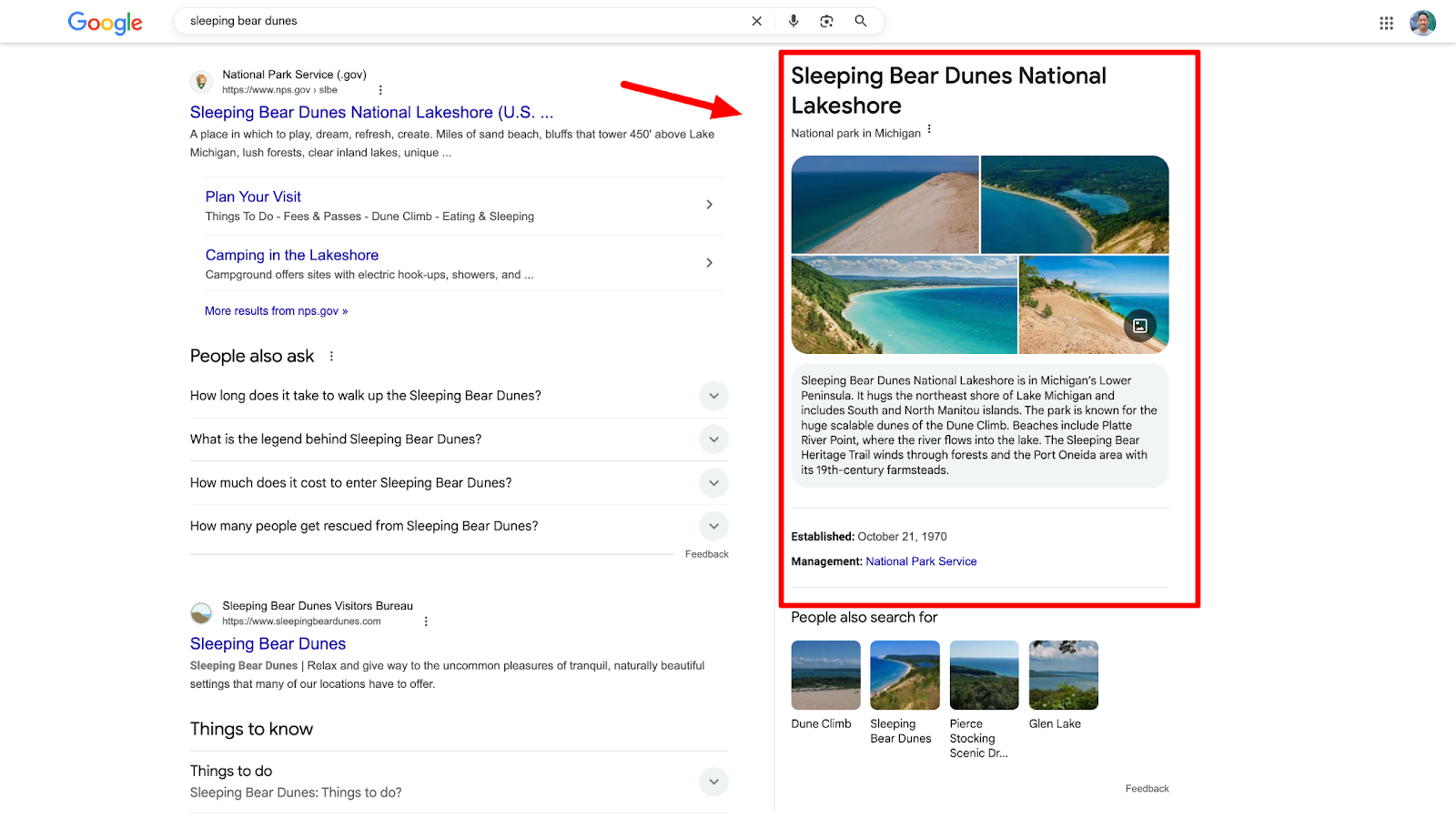
Knowledge Panels are the information boxes that appear on the right side of search results, typically for businesses, celebrities, or well-known places. These show key facts, contact information, and related details without requiring any clicks.
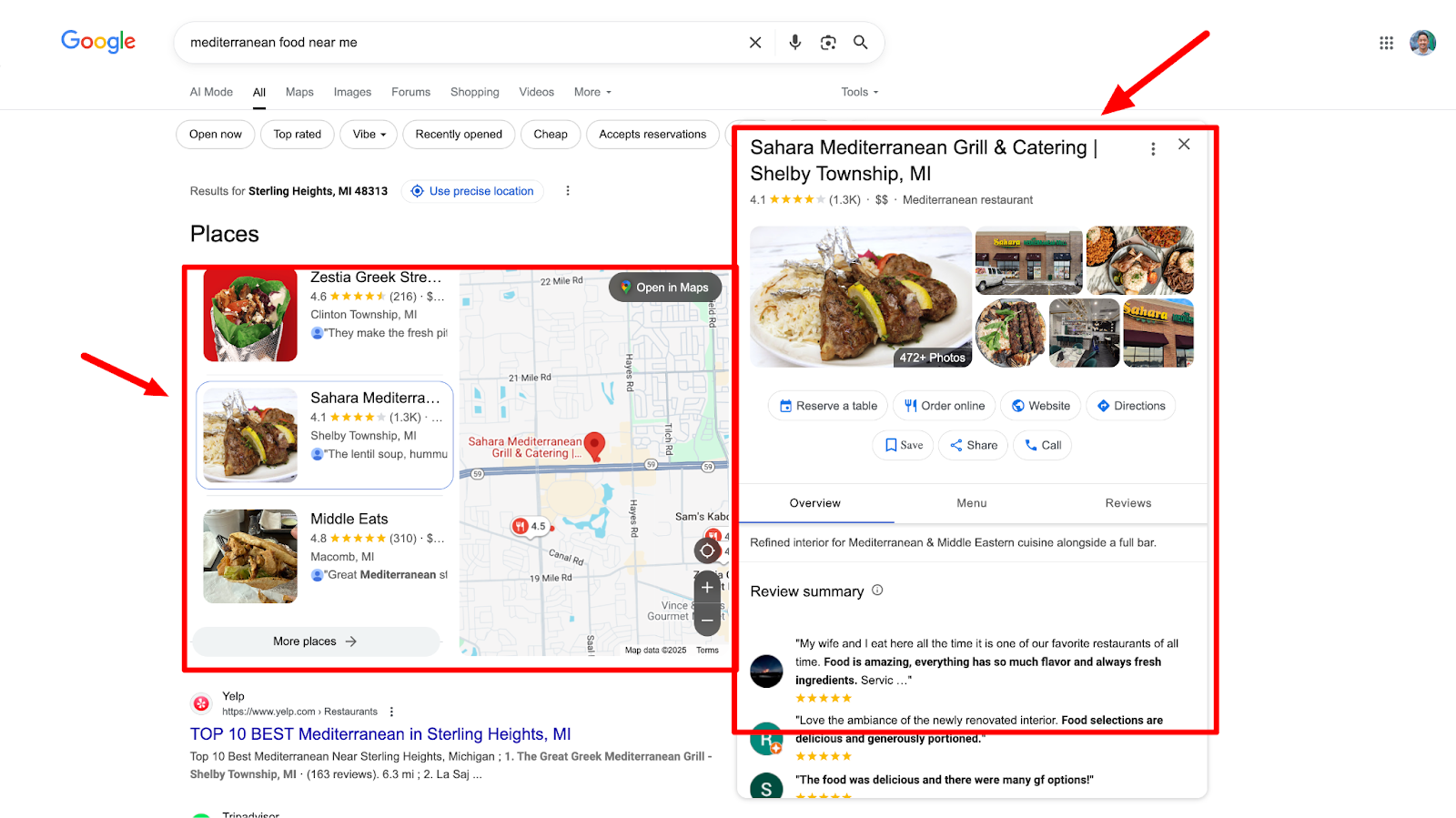
Local Packs are the map results showing three local businesses when someone searches for services "near me." These display business names, ratings, addresses, and phone numbers right in the search results.

People Also Ask sections show related questions that expand when clicked, often answering multiple related queries without leaving the search page.
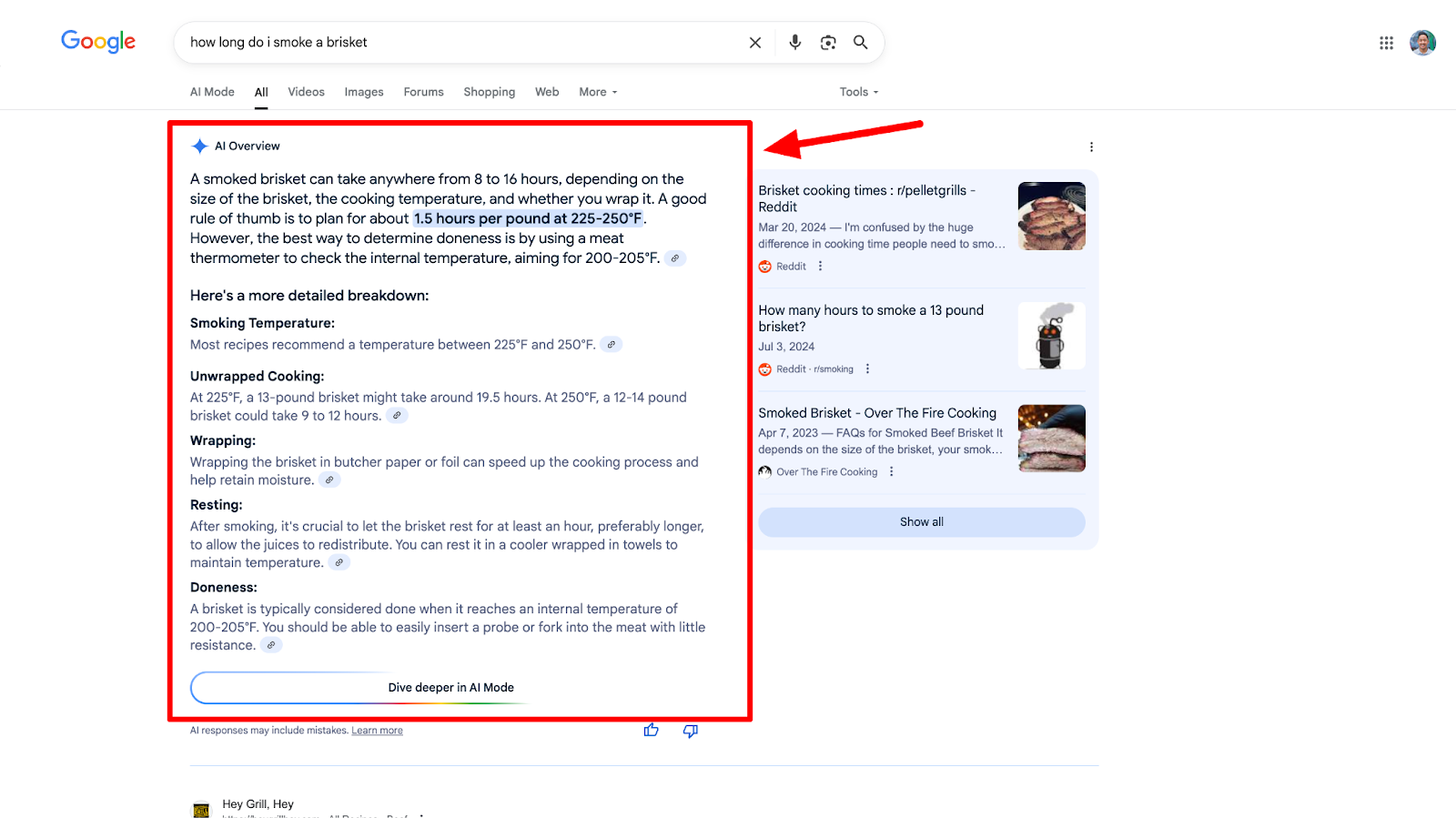
AI Overviews are Google's newest addition – AI-generated summaries that combine information from multiple sources to provide comprehensive answers. These launched in 2024 and are rapidly expanding across more search types.
The Numbers That Should Matter to Your Business
Here's where this trend gets significant for business owners. In 2019, about 50% of searches ended without clicks. That seemed like a lot back then. Fast-forward to 2024, and we're looking at nearly 60% in the United States and 59.7% in European markets. Industry experts predict this will exceed 70% by 2025.
On mobile devices – where most of your customers are searching – the numbers are even more dramatic. Over 75% of mobile searches now end without anyone clicking through to a website.
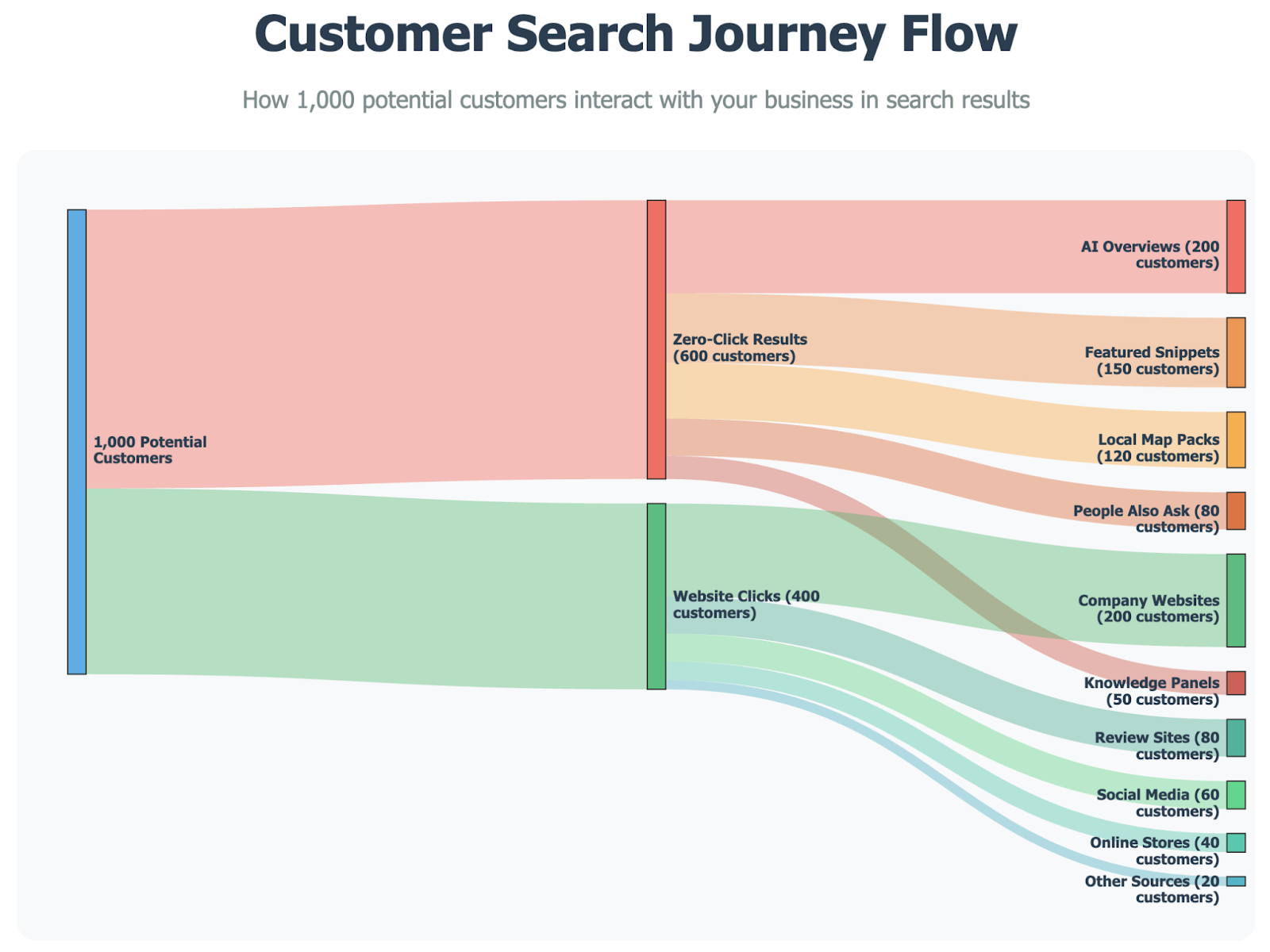
Let me put this in perspective with a real business scenario: If 1,000 potential customers search for services like yours this month, only about 400 of them will click through to a website through the organic SERPs. The other 600 will get their initial information directly from the search results page through AI overviews, featured snippets, or local map packs.
See an example of how 1,000 potential customers could interact with your business. As you can see, even with zero-click searches taking away organic search traffic, there is still a lot of opportunities for your brand to be visible.
How This Is Changing the Digital Marketing Game
If you work with SEO specialists or digital marketing agencies, you've probably noticed some frustration in recent conversations. That's because the rules of the game have fundamentally changed, and many professionals are still adapting their strategies.
The SEO Specialist's New Reality
For years, SEO was relatively straightforward: create good content, optimize it for relevant keywords, build quality links, and climb the rankings to get more website traffic. Higher rankings meant more clicks, more clicks meant more potential customers, and more potential customers meant more business.
Now, even ranking #1 for your target keywords doesn't guarantee traffic the way it used to. Your content might be feeding Google's answer system instead of driving visitors to your website. It's like being the best chef in town, but instead of people coming to your restaurant, the food delivery service is describing your recipes to customers over the phone.
This creates some interesting challenges for measuring success. Traditional metrics like page views, bounce rates, and click-through rates are becoming less meaningful when a significant portion of your audience never actually visits your website. Many SEO professionals, like ourselves, are having to completely rethink how they measure and report on campaign success.
Forget #1, Go For Position Zero
The businesses I work with often ask me: "Are we wasting money on SEO if people aren't clicking through to our website?" The answer is definitely not – but the strategy and expectations need to evolve.
Your content is still crucial, but now it might be serving a different purpose. Instead of just driving traffic, it's establishing your business as the authoritative source that Google trusts for answers. When someone searches for information related to your industry, you want to be the business that Google quotes in its answers.
Think of it this way: in the pre-internet days, being mentioned in the local newspaper was valuable even if people didn't immediately call your business. The exposure and credibility had value beyond direct response. Zero-click search results work similarly – they build brand awareness and establish authority even when they don't generate immediate website traffic.
The competition has also shifted. Instead of just competing for the top 10 search results, businesses are now fighting for "position zero" – that coveted featured snippet spot that appears above all other results. Being in position zero means your information is what Google considers the best answer to that particular question.
How To Adapt To Zero Click Searches
The businesses succeeding in this new environment aren't fighting against zero-click searches – they're optimizing for them. Here are some effective tactics that we’ve seen work well:
Optimize for Being the Answer Source
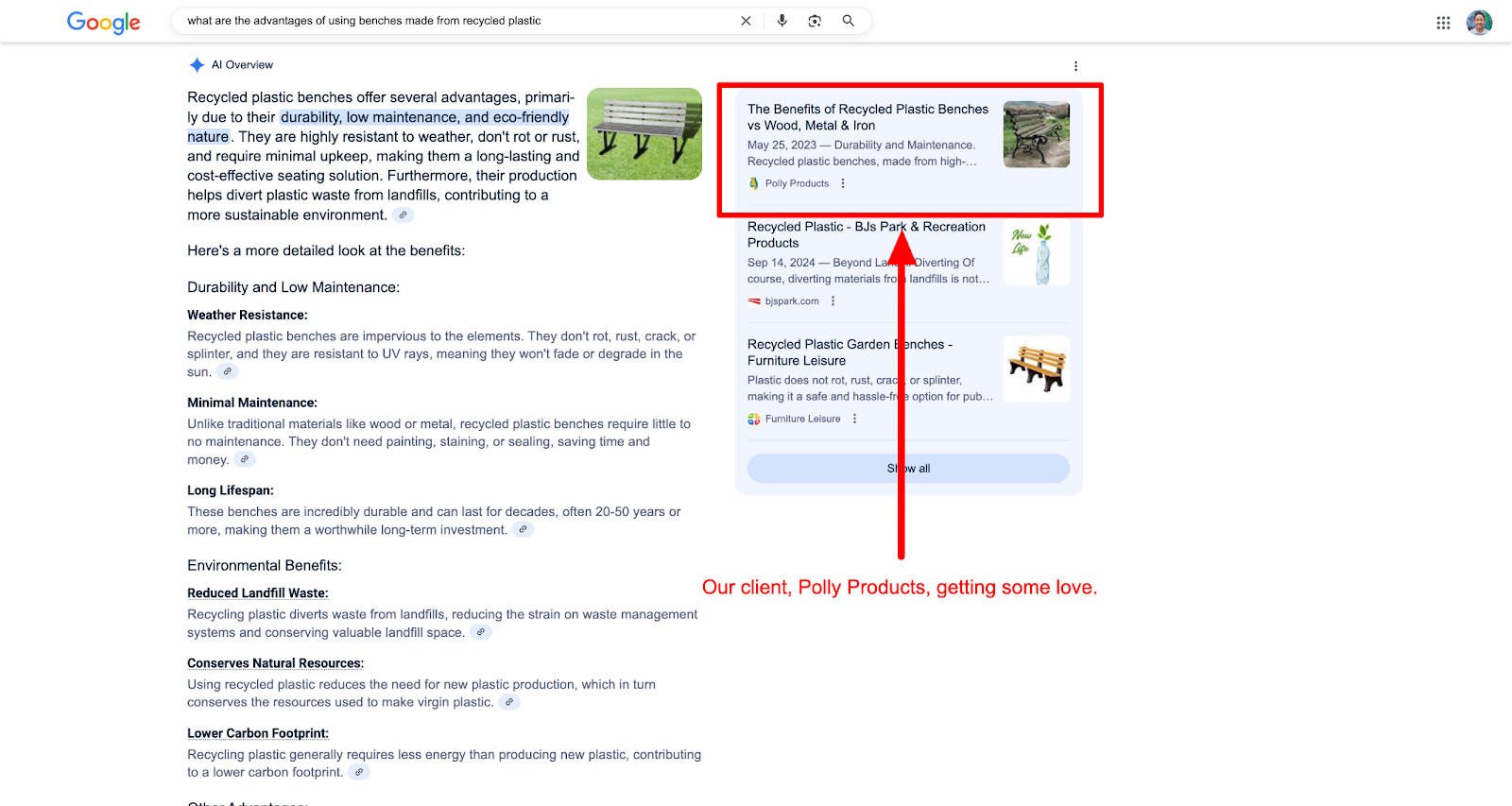
The most effective approach is positioning your business as the go-to source for answers in your industry. This means creating content that directly answers common customer questions in clear, concise formats.
Instead of writing long blog posts that bury the answer, lead with the information people need. If you're a roofing contractor, don't make people scroll through 800 words to find out that asphalt shingles typically last 20-25 years. Put that answer in the first paragraph, then provide additional context.
Structure your content with clear headings that match the questions people ask. Use formats like numbered lists, bullet points, and step-by-step guides that search engines can easily understand and extract for featured snippets.
Create comprehensive FAQ sections that address real customer questions. Don't just guess what people might ask – use tools like Google's "People Also Ask" sections and customer service logs to identify actual questions your audience has.
Diversify Your Digital Presence
Smart businesses are reducing their dependence on website traffic by building relationships across multiple platforms:
- Social Media Expansion: Build genuine followings on platforms where your customers spend time. This creates direct relationships that don't depend on search algorithms or website traffic.
- Email Marketing: Develop email lists that allow you to communicate directly with interested customers. When search sends fewer people to your website, email becomes even more valuable for maintaining customer relationships.
- Review Platform Optimization: Actively manage your presence on Google Business Profile, Yelp, Facebook, and industry-specific review sites. These platforms often appear in zero-click results and can drive direct contact.
- Video Content: Create YouTube content that can appear in search results. Video answers to common questions often show up in both Google and YouTube search results, giving you multiple visibility opportunities.
Embrace New Success Metrics

The businesses adapting successfully to zero-click searches are tracking different metrics:
- Brand Search Volume: Monitor how many people search for your business by name using Google Search Console. Increases in branded searches often indicate that your zero-click visibility is building awareness.
- Impression Tracking: Use Google Search Console to see how often your content appears in search results, even when it doesn't generate clicks. High impression volumes with good average positions indicate strong visibility.
- Direct Traffic Growth: Watch for increases in people typing your URL directly into browsers by using GA4. This often indicates that search visibility is building brand awareness, leading to direct visits later.
- Phone Calls and Inquiries: Track offline conversions using tools like CallRail that may result from search visibility. Many customers see your information in search results and then call or visit directly without clicking your website first.
- Review and Rating Increases: Monitor growth in customer reviews across platforms. Increased visibility often leads to more customer interactions and reviews.
The Bottom Line: Embracing the New Search Reality
Zero-click searches represent the evolution of how people find and interact with businesses online. While this change requires adapting strategies and expectations, it's not a crisis – it's an opportunity for businesses that understand how to work with these new realities.
The most successful businesses will be those that focus on providing genuine value and establishing authority in their industries. Whether that value is delivered through website visits, phone calls, in-person visits, or simply building brand awareness through search visibility, the fundamental goal remains the same: connecting with customers and providing excellent service.
The businesses that thrive in 2025 and beyond will be those that:
- Focus on being the authoritative source for answers in their industry
- Build relationships across multiple platforms and touchpoints
- Measure success based on customer action rather than just website metrics
- Adapt quickly to new search technologies and user behaviors
- Provide clear, valuable information that serves customer needs
If you're feeling overwhelmed by these changes, remember that every major shift in digital marketing has created opportunities for businesses willing to adapt. The companies that embraced websites in the 1990s, social media in the 2000s, and mobile optimization in the 2010s gained significant competitive advantages.
Zero-click search optimization is the current opportunity. The question isn't whether this trend will continue – the question is whether your business will be positioned to benefit from it.
Start with the simple steps outlined above, focus on providing genuine value to your customers, and remember that the goal of all marketing is ultimately to build relationships and drive business results. Zero-click searches are simply a new channel for achieving those timeless objectives.
The businesses that view this as an opportunity rather than a threat, and that take action now rather than waiting, will be the ones dominating their markets in the years ahead.
